_34792_80490.jpg)
Engie, the French parent of Belgian power company Electrabel, and the Belgian government said their Letter of Intent covers a proposed transaction which "encompasses the full scope of the nuclear activities currently owned and operated by Engie and Electrabel and their affiliates, including the complete nuclear fleet of seven reactors, the associated personnel, all nuclear subsidiaries, as well as all associated assets and liabilities, including decommissioning and dismantling obligations".
The joint statement said: "This initiative reflects the Belgian Government's strategic decision to assume direct ownership of the country's nuclear assets, in line with its ambition to extend the operation of existing nuclear reactors and to develop new nuclear capacity in Belgium. By doing so, the Belgian Government is taking responsibility for Belgium's long-term energy future, with the objective of building a financially and economically viable activity that supports security of supply, climate objectives, industrial resilience and socio-economic prosperity."
The two sides "will negotiate in good faith with the objective of concluding heads of terms by 1 October 2026". The Letter of Intent does not constitute a binding commitment - the completion "remains subject to, among other things, the negotiation and execution of definitive agreements and the required third-party and regulatory approvals".
Background
Belgium's federal law of 31 January 2003 required the phase-out of all seven nuclear power reactors in the country. Under that policy, Doel 1 and 2 were originally set to be taken out of service on their 40th anniversaries, in 2015. However, the law was amended in 2013 and 2015 to provide for Doel 1 and 2 to remain operational for an additional 10 years. Doel 1 was retired in February 2025. Doel 3 was closed in September 2022 and Tihange 2 at the end of January 2023. Tihange 1 was disconnected from the grid on 30 September 2025. The fifth closed unit, Doel 2 in the Flanders region, was taken offline for the final time after 50 years of operation and disconnected from the grid in December.
Belgium's last two operating reactors - Doel 4 and Tihange 3 - had also been scheduled to close at the end of 2025. However, following the start of the Russia-Ukraine conflict in February 2022 the government and Electrabel began negotiating the feasibility and terms for the operation of the reactors for a further ten years, to 2035. A final agreement was reached with a balanced risk allocation - equal ownership of Doel 3 and Tihange 4 between the Belgian state and Engie, and the transfer of nuclear waste liabilities from Engie to the Belgian state for EUR15 billion (USD16 billion) payable in two instalments.
For the continued operation of Doel 4 and Tihange 3, Electrabel had to submit an extensive LTO (Long Term Operation) file with safety studies and an action plan to further increase the safety of the youngest reactors. This file was submitted in December 2024 for both units. Tihange 3 was taken offline on 5 April 2025 for a so-called 'LTO overhaul' - an extensive inspection and maintenance period with a view to safe long-term operation of the reactor. After a thorough analysis, regulator FANC and its technical subsidiary Bel V determined that the reactor meets the conditions for a safe restart and the 1020 MWe PWR resumed operation on 10 July. Doel 4 was taken offline on 30 June for its LTO overhaul and was restarted on 8 October.
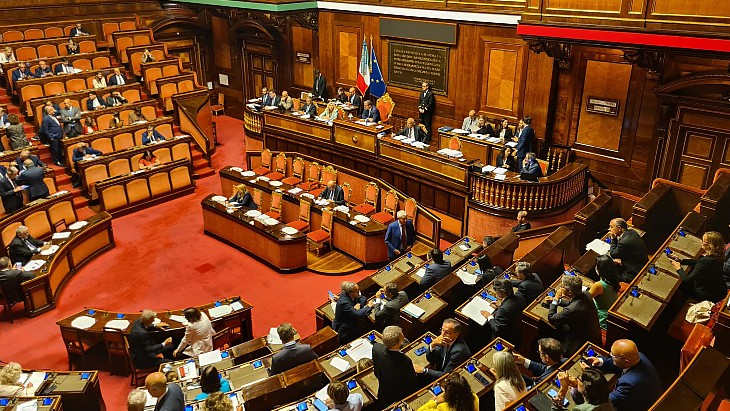
In February 2025, Belgium's new coalition government announced plans to operate the two units for a further 10 years beyond 2035. In May 2025, Belgium's federal parliament voted by a large majority to repeal the 2003 law which set out a phase-out of nuclear power and ban on the construction of new nuclear generating capacity.


_76412.jpg)
_38809.jpg)
_15774.jpg)