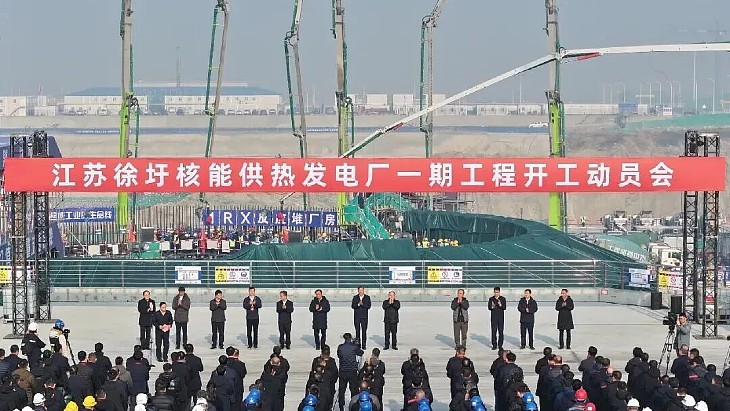
Xuwei Phase I was among 11 reactors approved by China's State Council in August 2024. China National Nuclear Corporation (CNNC) plans to build two 1208 MWe (net) Hualong One units and one 660 MWe high-temperature gas-cooled reactor (HTGR) unit at the site in Lianyungang, Jiangsu province. The project will be equipped with a steam heat exchange station, which will adopt the heat-to-electricity operation mode for the first time. China National Nuclear Corporation (CNNC) describes the project as the "world's first dual-coupling demonstration project combining a third-generation nuclear PWR and a fourth-generation nuclear HTGR".
_4735e09c.jpg)
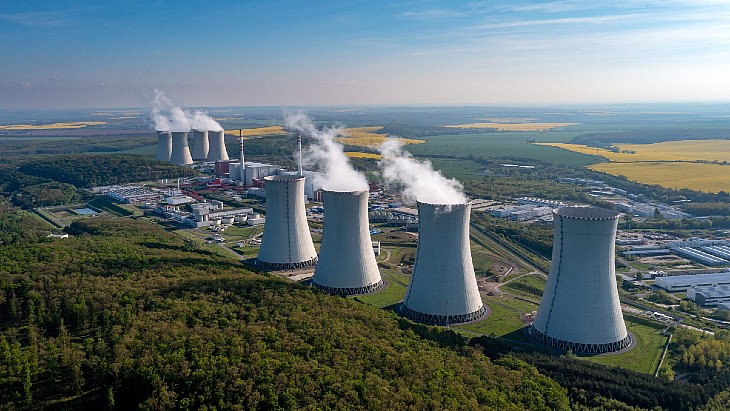
(Image: CNNP)
At the plant - very close to CNNC's existing Tianwan plant - demineralised water will be heated by the primary steam of the Hualong One units to produce saturated steam, and the primary steam of the HTGR will be used to heat the saturated steam for the second time.
_a202a4b5.jpg)
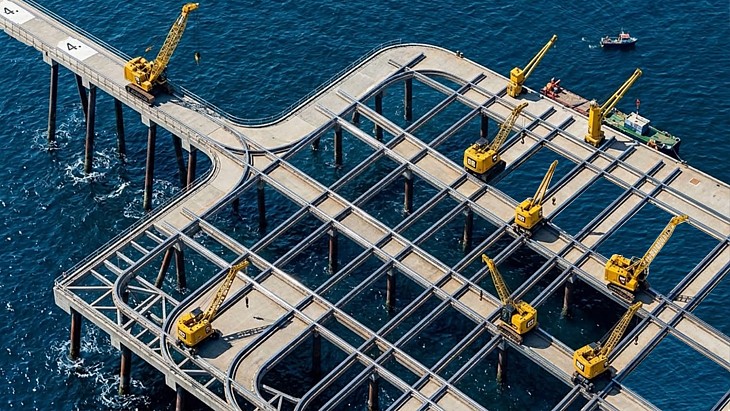
(Image: CNNP)
A contract for the construction of the conventional islands of the three units was awarded in September last year to a consortium formed by China Energy Engineering Jiangsu Electric Power Construction No 3 Company and China National Nuclear Huachen Construction Engineering Company. Under the CNY4.2 billion (USD594 million) contract, Jiangsu Electric Power Construction No 3 Company will build the three conventional island power plants, their ancillary facilities, and the construction and installation of some 'balance of plant' components.
_812240c0.jpg)
A rendering of the Xuwei plant (Image: CNNC)
CNNC Suneng Nuclear Power Company, is the CNNC subsidiary which is the owner of the Xuwei project and responsible for project investment, construction and operation management.
Once the project is completed and put into operation, it will supply 32.5 million tonnes of industrial steam annually, with a maximum power generation of more than 11.5 billion kilowatt-hours, which can reduce the use of standard coal by 7.26 million tonnes and reduce carbon dioxide emissions by 19.6 million tonnes each year.


_55605.jpg)