_21742.jpg)
The steel dome module is an important component of the shielded building, situated on top of a steel-concrete composite structure, and supporting the passive containment cooling water storage tank. The steel dome is conical in shape, consisting of 32 radial main beams, three ring beams, 96 steel cladding panels, and three steel platforms connected at the bottom. It has a diameter of about 41 metres, a height of about 11 metres, and a total lifting weight of nearly 1,000 tonnes.
"This marks the official completion of the main structure of Unit 1's main plant, signifying the project's transition from the civil construction phase to the equipment installation phase, laying a solid foundation for subsequent project progress," China National Nuclear Corporation (CNNC) said. "As a crucial final step in the modular construction of the project's steel structure, the steel dome is not only a key symbol of the main plant's structural closure but also a critical barrier ensuring the safe and stable operation of the nuclear power plant."
_ba95fab7.jpg)
(Image: CNNC)
The construction of the first two 1,250 MWe CAP1000 reactors - the Chinese version of the Westinghouse AP1000 - at the Lianjiang site was approved by China's State Council in September 2022. Excavation works for the units began in the same month, with the pouring of first concrete for the foundation of unit 1 starting in September 2023 and that of unit 2 in April 2024. Unit 1 is expected to be completed and put into operation in 2028.
CNNC is constructing the plant on behalf of the State Power Investment Corporation (SPIC).
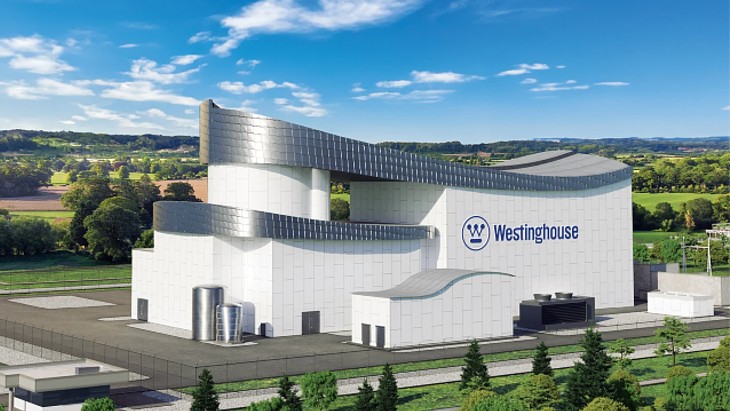
The CAP1000 reactor design uses modular construction techniques, enabling large structural modules to be built at factories and then installed at the site. This means that more construction activities can take place at the same time, reducing the time taken to build a plant as well as offering economic and quality control benefits.
Once all six CAP1000 units planned at the site are completed, the annual power generation will be about 70.2 TWh, which will reduce standard coal consumption by more than 20 million tonnes, and reduce carbon dioxide emissions by more than 52 million tonnes, sulphur dioxide by about 171,000 tonnes and nitrogen oxides by about 149,000 tonnes.
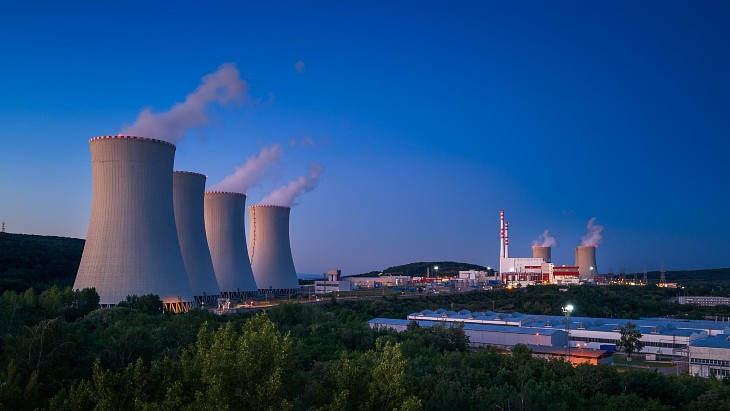
SPIC says the Lianjiang plant will be the first nuclear power project in China to adopt seawater secondary circulation cooling technology as well as the first to use a super-large cooling tower.


_37830.jpg)
_22748.jpg)
_85344.jpg)