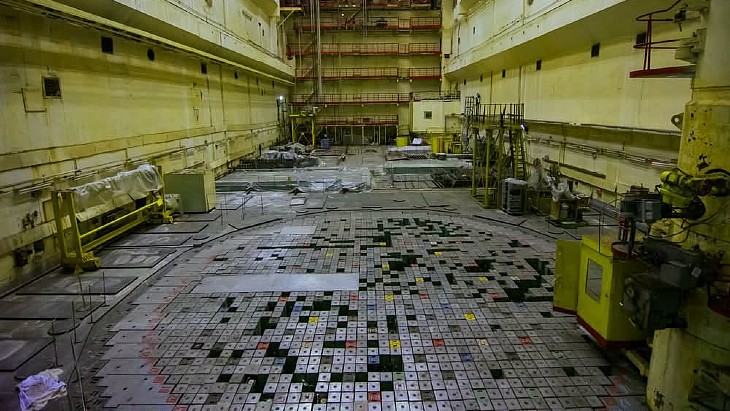
The accident in 1986 destroyed the plant's unit 4, but three other units were undamaged and continued to operate afterwards - the last one was only shut down 14 years later.
According to an update from Chornobyl Nuclear Power Plant (ChNPP), its staff have now completed 94% of preparatory work for the decommissioning of unit 2, with 44% also completed at unit 1.
Planning for the work at unit 3 is currently taking place, with "physical works scheduled to begin in 2027".
The work includes: decommissioning of systems and components located within the conservation zone premises; removal of thermal insulation and combustible materials; removal of power, signalling and control cables; sealing of wall penetrations, installation and process openings at the boundary between the conservation zone premises and the control zones; and installation of fire-resistant panels and mats at the points where wall penetrations and installation openings have been sealed, and on air ducts within the conservation zone.
Maksym Protsenko, Head of the Chornobyl NPP Engineering Centre, said: "We have decided to carry out these works using the plant's own personnel, as part of ongoing operations and in accordance with the work execution plans developed by the Chornobyl NPP Engineering Centre."
The current work is described as the second of four stages of decommissioning and "the final shutdown and conservation of the reactor installations of Units 1, 2 and 3".
These three units, all RBMK-1000 reactors, closed down in 1991, 1996 and 2000, respectively. There are also two almost-completed ones, being decommissioned.
The first phase of the work was completed by 2015, when all units were offline and had their nuclear fuel removed and transferred to the used nuclear fuel storage facility.
Once the current stage is completed, contractors will undertake work, including lowering the height of parts of the units by 12-16 metres, as well as the dismantling of loading and unloading machinery and hoisting mechanisms.
ChNPP says there will also be work to carry out "key measures aimed at ensuring safety and preparing the reactor units for long-term controlled storage" which includes:
- Dismantling systems and plant components external to the nuclear reactor
- Strengthening the barriers to the release of radioactive substances
- Reliable preservation of plant components that are not subject to dismantling
- The creation of conditions for the temporary controlled storage of radioactive substances remaining within the plant
- The collection and conditioning of radioactive waste generated during the works, and its transfer to specialised organisations for further management
ChNPP says: "The safe storage stage involves a period during which the level of radioactivity is expected to decrease naturally to acceptable levels. It is planned to move to this stage in 2034, following verification of the safety of long-term storage of radioactive materials within the limits and for the duration specified in the nuclear facility decommissioning project."
During the next stage - the dismantling of the reactor units - systems and components subject to control as sources of ionising radiation will be dismantled and removed, and subsequently placed in radioactive waste repositories. Protsenko said: "This approach to the decommissioning of the Chornobyl NPP complies with national regulations and international standards."
What about unit 4?
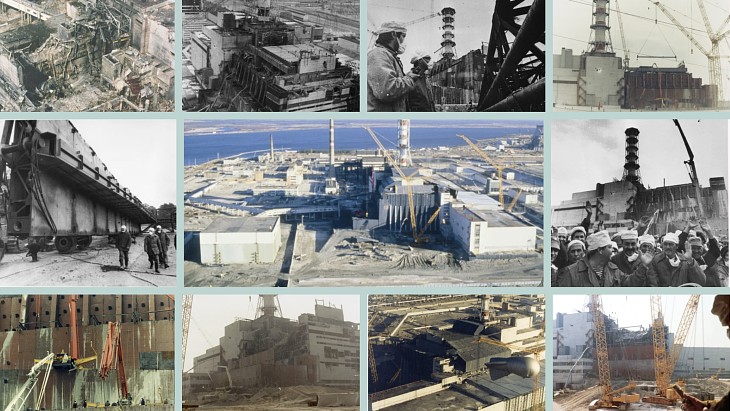
The situation with the fourth unit, which was destroyed during the accident in April 1986, is different. A shelter was constructed in a matter of months to encase the damaged unit, which allowed the other units at the plant to continue operating. It still contains the molten core of the reactor and an estimated 200 tonnes of highly radioactive material.
However that shelter was not designed for the very long-term, and so the New Safe Confinement - the largest moveable land-based structure ever built - was constructed to cover a much larger area including the original shelter. The New Safe Confinement has a span of 257 metres, a length of 162 metres, a height of 108 metres and a total weight of 36,000 tonnes and was designed for a lifetime of about 100 years. It was damaged by a drone strike last year and there is work taking place to return it to its full design functions before the proposed safety work on the original shelter can take place.
Read more: Chernobyl unit 4 and the decommissioning challenge
(Images: ChNPP)


_55605.jpg)
_18654.jpg)