The Estonian Government initiated the state spatial planning process for the nuclear power plant at the request of Fermi Energia in May 2025. The planning area included the rural municipalities of Viru-Nigula, Haljala, Rakvere and Vinni and the Rakvere city rural municipality in Lääne-Viru county; the Lüganuse and Toila rural municipalities and Kohtla-Järve city in Ida-Viru county; and the sea area from Kunda Bay to Narva Bay, covering some 1,285 square kilometres in total. This is significantly larger than the actual area where the nuclear power plant and the necessary facilities will be built, but ensures that the best location for the nuclear power plant can be thoroughly considered and assessed, the government said.
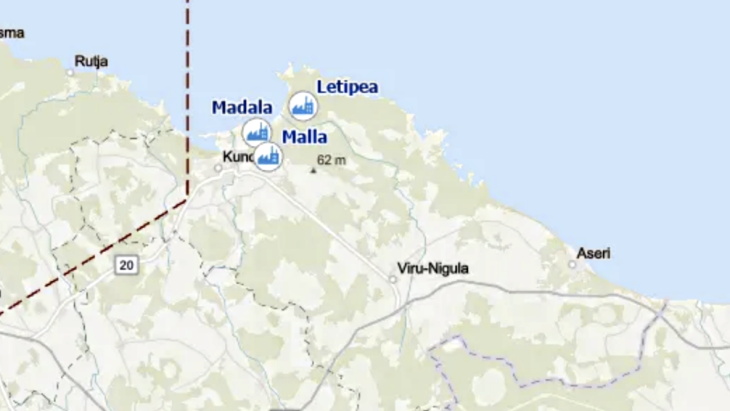
The first part of the phased planning process - site pre-selection - is taking place up to 2027, focusing on promising areas near the village of Kunda in Viru-Nigula and the village of Aa in Lüganuse. Each location's strategic access to existing infrastructure, is being evaluated, alongside Environmental Impact Assessments, to identify the most viable and sustainable options for development.
The government passed the Nuclear Energy and Safety Act in March this year, with parliamentary approval following in June. The legislation sets out key steps required for the deployment of nuclear energy in Estonia, including rules "for selecting the location of a nuclear power plant and for its construction, testing, and operation, as well as the rules for its decommissioning, and the final disposal of nuclear waste".
"The starting points for the preparation of the national special plan for the nuclear power plant have been supplemented and the impact assessment and location selection methodology have been specified," the Ministry of Economic Affairs and Communications has now announced. "Accordingly, instead of the previous six locations, three possible sites in Viru-Nigula rural municipality will be considered in the future: Madala, Malla and Letipea."
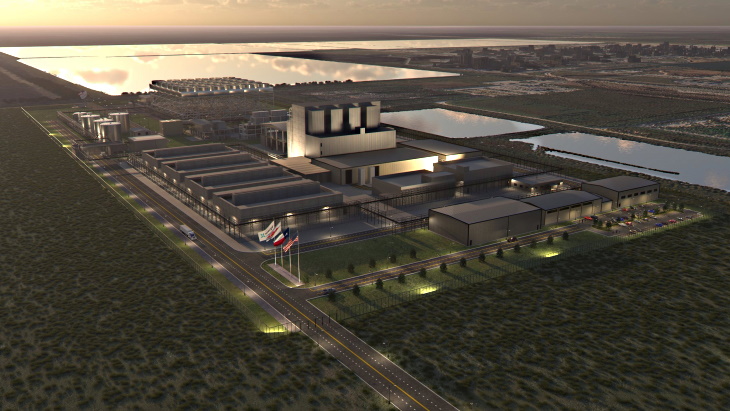
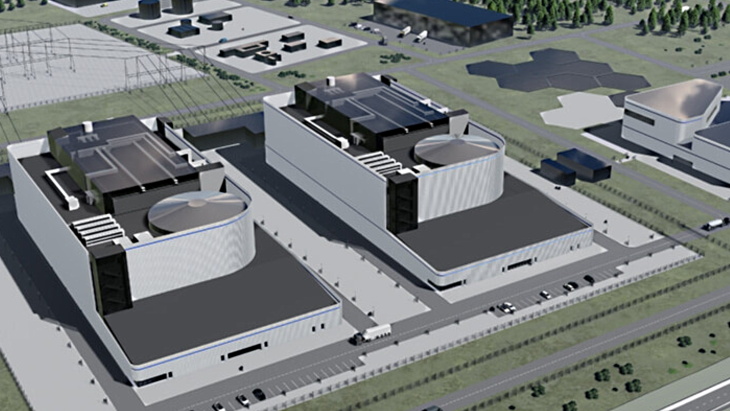
(Image: Fermi Energia)
"During the planning process, we are collecting information about the suitability and limitations of possible locations," said project manager Agnes Lihtsa. "The input from the authorities so far has helped to specify which areas are justified for further work.
"Although the number of possible locations for the nuclear power plant has decreased, the planning area has not decreased and still concerns eight municipalities," she explained. "In addition to the plant itself, the electrical connections, cooling water lines, access roads and other infrastructure necessary for its operation must also be planned, the route corridors of which may still pass through the territories of these municipalities. The locations of the substations considered so far have also not changed."
The planning procedure consists of two stages. First, the most suitable location for the nuclear power plant and its infrastructure will be decided by the end of 2027. Then, a detailed solution for the construction of the plant and infrastructure (such as roads and utility networks) will be prepared at the selected location, and additional impact assessments will be carried out before final decisions are made. The establishment of the spatial plan could take place in 2030 at the earliest.
Estonian SMR project
Fermi Energia was founded by Estonian energy and nuclear energy professionals to develop deployment of small modular reactors (SMRs) in Estonia. In July 2019, the company launched a feasibility study on the suitability of SMRs for Estonia's electricity supply and climate goals beyond 2030, following a financing round from investors and shareholders.
In February 2023, the company selected GE Vernova Hitachi Nuclear Energy's BWRX-300 SMR for potential deployment by the early 2030s. The BWRX-300 design is a 300 MWe water-cooled, natural circulation SMR with passive safety systems that leverages the design and licensing basis of the company's ESBWR boiling water reactor.
Fermi Energia expects to submit a construction permit application for the proposed two-SMR plant in 2029, with construction targeted to begin in 2031. The first of the SMRs is intended to be operational by the second half of 2035.
In April last year, Fermi Energia and South Korea's Samsung C&T signed a teaming agreement to collaborate on the deployment of two BWRX-300 SMRs in Estonia. Under the teaming agreement, the cooperation between Fermi Energia and Samsung C&T will focus on key aspects of the project, including the formation of an Engineering, Procurement, and Construction (EPC) partnership, site constructability review, cost estimation, and financing strategies. The agreement also positions Samsung C&T as a potential EPC Prime Contractor and key commercial partner in the Estonian SMR project. This collaboration built upon a memorandum of understanding signed between the two companies in November 2024.
A first BWRX-300 small modular reactor is currently under construction at the Darlington site in Canada. The aim is for the first of four planned units there to be connected to the grid in 2030.