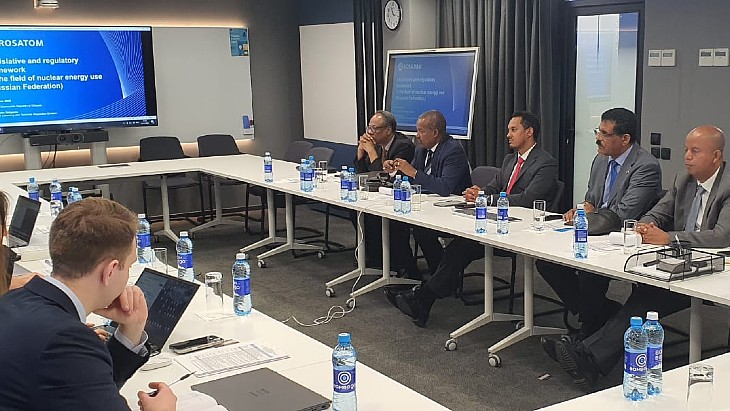
According to Russia's state nuclear corporation Rosatom, "the parties discussed a comprehensive range of issues related to the construction of a large-scale nuclear power plant in Ethiopia featuring Russian design”. And the two sides “reaffirmed their commitment to advancing joint work on the project".
Ethiopia's Ministry of Foreign Affairs said the two sides signed a Non-Disclosure Agreement "as part of the implementation of a prior agreement between the two countries aimed at advancing the development and construction of Ethiopia’s first nuclear power plant, a milestone project in the country’s development efforts" and added that a roadmap of next steps was also being presented.
Earlier this month the Ethiopian Nuclear Power Programme was officially launched in Addis Ababa, and the newly created Ethiopian Nuclear Energy Commission began work.
At that event, the Ministry of Foreign Affairs said, it was explained that the nuclear power programme was being "driven by rapidly growing electricity demand, the need for reliable baseload energy, and Ethiopia’s long-term industrial ambitions" as well as the role "nuclear power will play in ensuring energy security, supporting urbanisation, and powering emerging sectors such as data centres and advanced manufacturing".
Sandokan Debebe, Chief Commissioner of the Ethiopian Nuclear Energy Commission, said at the same event that Ethiopia’s nuclear vision extended beyond electricity generation "to include the peaceful application of nuclear science in healthcare, agriculture, industry, and research, delivering tangible socio-economic benefits". He also stressed that the country was aligning its national framework with International Atomic Energy Agency standards and "adhering strictly to all relevant international treaties and obligations, reaffirming the country’s commitment to a safe, secure, and lawful nuclear programme in support of a modern and industrialised nation".
Russia and Ethiopia signed a roadmap for bilateral cooperation in the use of atomic energy for peaceful purposes in 2023. According to Rosatom at that time: "The roadmap defines specific steps that the parties will take in 2023-2025 to explore the possibilities of building a nuclear power plant of large or small capacity, as well as a Nuclear Science and Technology Centre in Ethiopia. The parties plan to work together to develop Ethiopia's national nuclear infrastructure, organise technical tours and seminars, and meetings of specialised working groups."
In September this year Rosatom and the Ethiopian Electric Power Corporation signed an action plan for developing a nuclear power plant project in Ethiopia. It created a working group to prepare a roadmap for a feasibility study and intergovernmental agreement.
Following this week's negotiations the Ethiopian delegation toured the Kalinin nuclear power plant.


_29695_19459.jpg)
_98552.jpg)
_1_12560.jpg)
_22582.jpg)


_84289_33276.jpg)