The power unit's capacity will be gradually increased in steps, with safety tests and checks, to 35-40%. This will be followed by a lengthy period of increasing it to 100%.
The VVER-TOI pressurised water reactor has a capacity of 1,250 MW - higher than previous generations of VVER reactors. Rosatom says the service life of the main equipment has doubled, and it features a mix of passive and active safety systems and includes a core meltdown localiser.
The construction of the Kursk II power plant will more than replace the capacity of the four RBMK-1000 units at the Kursk plant as they come to the end of their lives.
Rosatom Director General Alexei Likhachev said: "The Kursk nuclear scientists deserve congratulations and thanks for such a wonderful New Year's gift, and the entire country for acquiring a new source of clean energy. Much work remains ahead for the Kursk residents. But the following can already be confirmed - the Kursk unit is the first embodiment of the latest VVER-TOI nuclear power unit design. This design not only incorporates the latest advances in nuclear energy. It is also the most powerful power unit in Rosatom's fleet: 1,250 MW, which is 50 MW more than the previous record-holders, the power units of Leningrad NPP-2."
Andrey Petrov, First Deputy Director General for Nuclear Energy at Rosatom and President of JSC ASE said: "Today's power start-up is the result of the hard work of tens of thousands of people - from those who poured the first concrete in 2018 to the engineers involved in the commissioning operations. Despite external threats, every specialist successfully completed their work, recognising their responsibility to the team and to the country. The new power unit will increase nuclear power generation by more than 50% to meet the needs of the Kursk Region and ensure the stable operation of the Central Asian Unified Energy System, guaranteeing its energy stability and confident progress."
Alexander Shutikov, CEO of Rosenergoatom, said: "The power unit's commissioning is proceeding according to plan. Comprehensive testing of the unit is currently under way, ensuring the required power level is reached. The equipment and systems must operate efficiently, reliably, and safely, as required by the process regulations. After all the process operations, we will confirm with Rostekhnadzor (Russia's nuclear regulator) that the unit's characteristics and physical parameters comply with modern nuclear energy standards and requirements."
Background
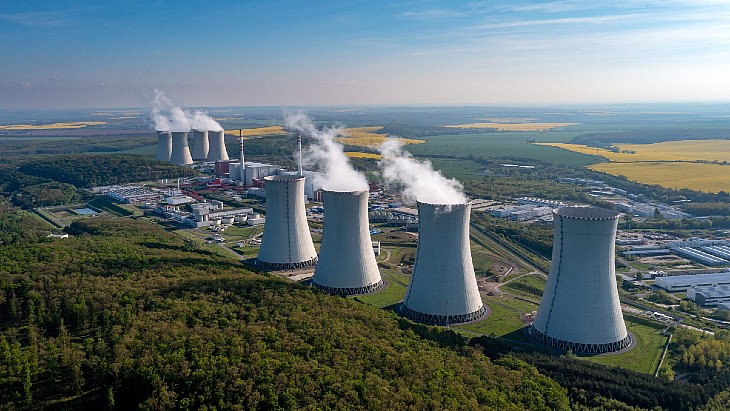
Kursk II is a new nuclear power plant in western Russia, about 60 kilometres (37.5 miles) from the Ukraine border, that will feature four VVER-TOI reactors, the latest version of Russia's large light-water designs. They have upgraded pressure vessels and a higher power rating of 3300 MWt that enables them to generate 1300 MWe gross. Construction of the first unit began in 2018, its polar crane was installed in October 2021 and the reactor vessel was put in place in June 2022. Concreting of the outer dome of the first unit was completed in August 2023. The second unit is also under construction and the target is for all four units to be in operation by 2034.
The new units will replace the four units at the existing, nearby Kursk nuclear power plant, which are scheduled to shut by 2031. The first unit was shut down after 45 years of operation in December 2021 and the second unit followed in January 2024. The original design life for the four RBMK-1000 reactors at the plant was for 30 years but had been extended by 15 years following life extension programmes.


_55605.jpg)