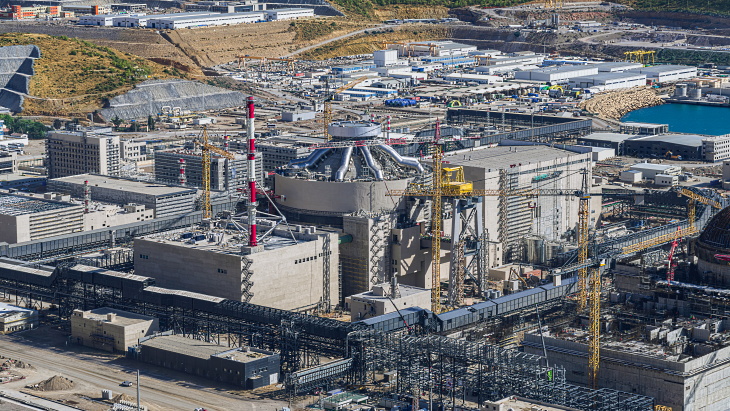
During the tests, the pressure in the primary circuit (the reactor, main circulation pumps, steam generators, the pressuriser, and the main circulation pipeline connecting them) was increased to 24.5 MPa - about one-and-a-half times higher than the reactor's normal operating pressure. The temperature of the primary circuit water at the initial stage of the operation reached 135°C. Specialists checked equipment status to ensure everything was in line with design requirements and international safety standards. An automated process control system (APCS) was put into operation during the hydraulic tests.
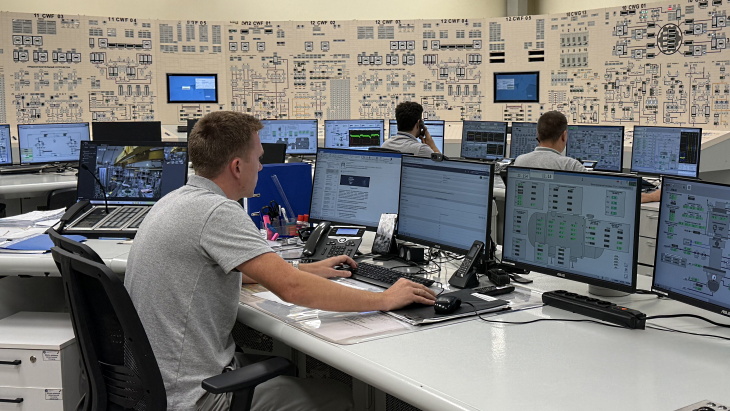
To conduct the hydraulic tests, the primary circuit was filled with chemically demineralised water, after which the required pressure and temperature were created using the main circulation pump units. During the tests, the unit's operating personnel in the control room monitored the condition of the equipment and pipelines using data from the APCS.
(Image: Rosatom)
During normal operation of the power unit, coolant - demineralised water at a temperature of up to 330°C under a pressure of about 16 MPa - circulates through the primary circuit, heating the secondary circuit feedwater in the steam generators.
Cold hydraulic tests, which began in June following the loading of dummy fuel, are carried out to confirm whether components and systems important to safety are properly installed and ready to operate in a cold condition. The main purpose of cold functional tests is to verify the leak-tightness of the primary circuit and components and to clean the main circulation pipes. The tests mark the first time the reactor systems are operated together with the auxiliary systems.
These are followed by the hot functional tests to confirm that equipment and systems are ready for operating conditions, including checking the operation of the four main circulation pumps at temperatures of at least 260°C. Both cold and hot tests take place before the loading of nuclear fuel in the commissioning process.
"During the construction of unit 1 of the Akkuyu NPP, thousands of complex engineering operations were completed," said Alexey Likhachev, Director General of Rosatom. "We are now at the stage where the results of this enormous undertaking are undergoing a comprehensive review. The safe operation of the entire unit depends on the reliability of the primary circuit. Exceptionally high technological requirements are placed on the equipment, pipelines, and welded joints here. Hydraulic testing has been successfully completed. This is convincing confirmation of the quality of the installation, welding, and commissioning work - and another step towards the unit's physical startup."
Background
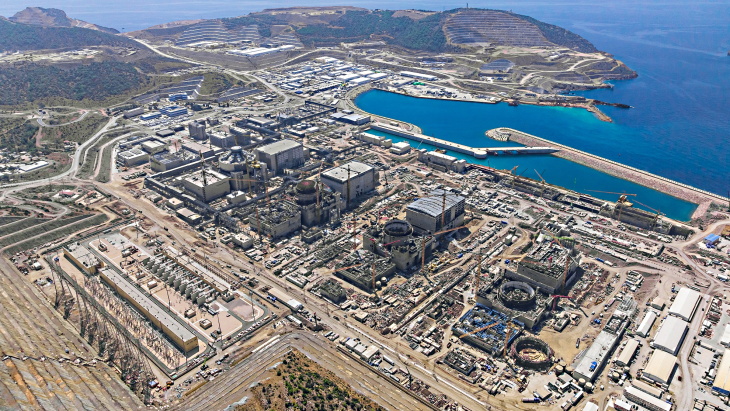
Akkuyu, in the southern Mersin province, is Turkey's first nuclear power plant. Russia's state nuclear corporation Rosatom is building four VVER-1200 reactors, under a so-called BOO (build-own-operate) model. According to the terms of the 2010 Intergovernmental Agreement between the Russian Federation and the Republic of Turkey, the aim was for the commissioning of the first power unit of the nuclear power plant to take place within seven years from receipt of all permits for the construction of the unit.
(Image: Rosatom)
The licence for the construction of the first unit was issued in 2018, with construction work beginning that year. Nuclear fuel was delivered to the site in April 2023. The aim has been for unit 1 to begin supplying Turkey's energy system by the end of 2026.
When the 4,800 MWe plant is completed, it is expected to meet about 10% of Turkey's electricity needs.
Turkey has plans for a second nuclear power plant, at Sinop, and has also been in talks with China about plans for a third plant, in the Thrace region in the country's north-west.
The country is also developing plans for small modular reactors, with the aim of adding 5 GWe of capacity by 2050 - which would mean the equivalent of at least 16 individual SMRs.


_51287.jpg)