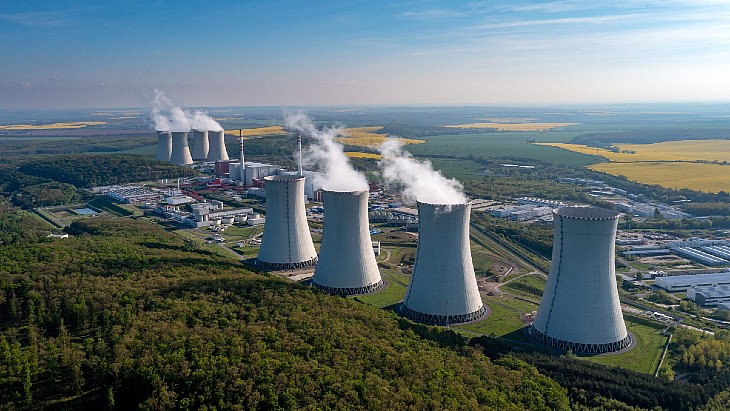
There are currently about 440 nuclear power reactors with a combined capacity of almost 397 GWe (net) operating in 31 countries, with at least 70 power reactors under construction, which will add another 77 GWe. Nuclear generation reached an all-time high of 2,667 TWh in 2024. The goal of at least tripling global nuclear capacity by 2050 has been endorsed by more than 30 countries since the United Nations Climate Change Conference (COP28) in Dubai in December 2023.
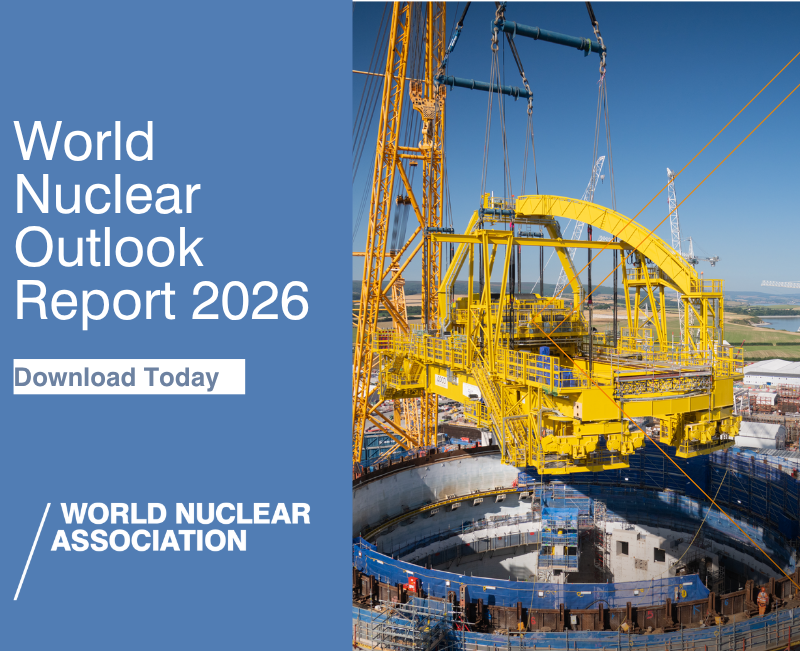
In its inaugural World Nuclear Outlook Report, World Nuclear Association (WNA) has compiled national government targets and goals for nuclear capacity for 2050 and assessed them alongside plans for continued and extended operation of existing reactors, completion of those under construction, and realisation of planned and proposed projects. It has found that they would more than meet the tripling target.
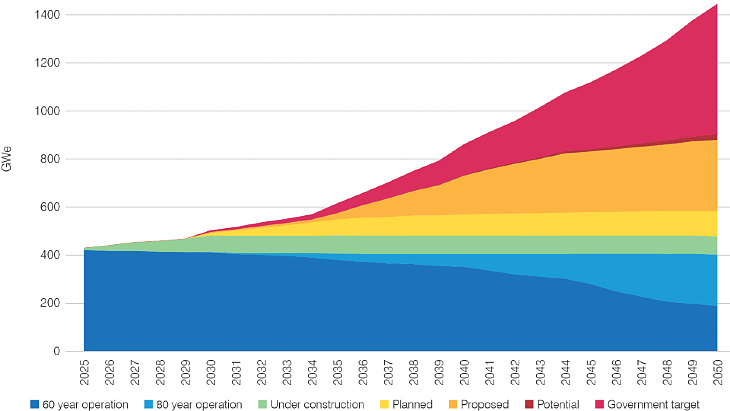
"Global nuclear capacity would expand significantly to 2050 if the continued operation of existing reactors and the deployment of new nuclear build meet targets set by governments for national nuclear capacity," the report says. "When all operable, under construction, planned, proposed, and potential reactors are combined with government targets, the total global capacity could reach 1,446 GWe by 2050."
The association notes: "Most growth to 2030 stems from reactors currently under construction; planned projects drive expansion to 2035; and proposed, potential, and government-driven programmes account for the increase in capacity after 2035."
It adds: "The 542 GWe of additional capacity associated with government targets beyond projects assessed as planned, proposed or potential is not yet supported by identified projects, and the level of commitment through policy or other governmental measures varies significantly from country to country."
The report says that achieving the projected 2050 capacity requires scaling annual grid connections from 14.4 GWe per year in 2026-2030, to 22.3 GWe per year in 2031-2035, to 49.2 GWe per year in 2036-2040, 51.6 GWe per year in 2041-2045 and 65.3 GWe per year in 2046-2050. It notes that the required 65.3 GWe per year during 2046-2050 is "roughly double the historic peak build rate seen in the 1980s".
In conclusion, the World Nuclear Outlook Report says: "National nuclear capacity goals to 2050 exceed the global tripling target and reflect strong alignment between national objectives and global decarbonisation needs. Achieving these ambitions will require unprecedented construction rates, strategic lifetime extension of existing reactors, and significant policy and market reforms. If nations deliver on their commitments, nuclear power would play a critical role in ensuring secure, affordable, and net-zero-compatible energy for a rapidly expanding and electrified global economy."
However, the report says that governments must "take immediate and sustained action" to deliver on their own national targets for nuclear capacity. "To secure a clean, reliable, and resilient energy future for all, governments must take action now implementing clear execution plans that can realise policy promises," it says. "Experienced countries, multilateral development institutions and the global nuclear industry should collaborate to support emerging economies interested in deploying nuclear energy for the first time."
The association recommends that governments recognise that nuclear energy is a central pillar in meeting global climate goals and that it should be integrated into long-term decarbonisation and energy security planning. It calls for them to set "durable, actionable nuclear policies and industrial strategies to enable long-term investment and to maintain industrial capabilities, workforce and supply chains". They should also support the continued operation of existing reactors to 60-80 years "where technically feasible". Electricity markets should be reformed to ensure equitable treatment of nuclear energy alongside other low-carbon sources. Governments should also support the acceleration of licensing, siting, and financing mechanisms to facilitate an increase in construction rates."
With regards to financial institutions, World Nuclear Association recommends they implement technology-neutral lending and environmental, social and corporate governance (ESG) policies to ensure nuclear and other low-carbon sources are evaluated using equivalent criteria. They should also support the deployment of nuclear in emerging economies.
The association calls for the nuclear industry itself to expand manufacturing and supply chain capacity, including fuel cycle infrastructure, while optimising series build to reduce costs and shorten build times. In addition, it should develop large-scale deployment strategies to meet post-2035 demand, including for non-grid applications utilising novel reactor technologies.
Speaking from the World Economic Forum Annual Meeting 2026 in Davos, World Nuclear Association Director General Sama Bilbao y León said: "Our analysis indicates that governments have ambitions that exceed the goal to triple nuclear capacity by 2050. Now, forward-thinking governments, global industry leaders, and civil society need to work together and take timely action to turn those ambitions into action. This is our chance to deliver a cleaner, more secure energy future for everyone everywhere, powered by affordable 24/7, low-carbon nuclear energy."


_55605.jpg)