The agreement establishes a framework for the evaluation of commercial arrangements to provide Newcleo with a proliferation-resistant feedstock of recycled nuclear materials for its mixed-oxide (MOX) fuel fabrication activities and sets out areas of collaboration on R&D activities to advance used nuclear fuel recycling technologies. The fuel would be used in Newcleo's lead-cooled fast reactors (LFRs), once deployed.
Washington, DC-based Curio's proprietary NuCycle technology is designed to recycle used nuclear fuel and recover valuable materials that can be utilised in future nuclear energy applications. By reducing residual waste volumes by up to 97% while recovering strategic nuclear materials, NuCycle offers a pathway toward a more sustainable, secure, and economically productive nuclear fuel cycle.
"By combining Curio's advanced nuclear fuel recycling technology with Newcleo's MOX fuel fabrication capabilities and LFRs, the companies aim to maximise the reuse of nuclear materials, reduce reliance on fresh uranium resources and minimise long-lived radioactive waste, while supporting nuclear non-proliferation objectives," Newcleo said.
"Securing early and reliable access to nuclear fuel materials is a critical component of our long-term growth strategy," said Stefano Buono, CEO and founder of Newcleo. "In establishing another avenue of access to recycled nuclear materials through our collaboration with Curio, we are taking an important step towards de-risking our future MOX fuel supply. As we look towards commercial deployment of our LFRs, fuel security is a crucial building block."
Curio President and CEO Edward McGinnis added: "Our patented NuCycle technology is designed to turn used nuclear fuel into proliferation-resistant feedstock for exactly the kind of fast reactors Newcleo is building. This collaboration represents a concrete step toward establishing the reliable supply chain needed to usher in the 2nd Nuclear Era."
In February this year, the US Department of Energy's Office of Nuclear Energy awarded more than USD19 million to five US companies to research and develop recycling technologies for used nuclear fuel. Curio is to receive funding to support the development of its NuCycle technology. The funding will support a collaborative effort between Curio and key partners including Idaho National Laboratory, Pacific Northwest National Laboratory, and several other technical organisations to optimise for scale-up and commercialisation of NuCycle. The primary objective of the collaboration is to develop detailed engineering designs and specifications for NuCycle's core processes and prepare for a pilot-scale demonstration.
In August, Curio signed a memorandum of understanding with NuScale Power and Framatome to evaluate how recovered materials from used nuclear fuel can support future fuel and product streams.
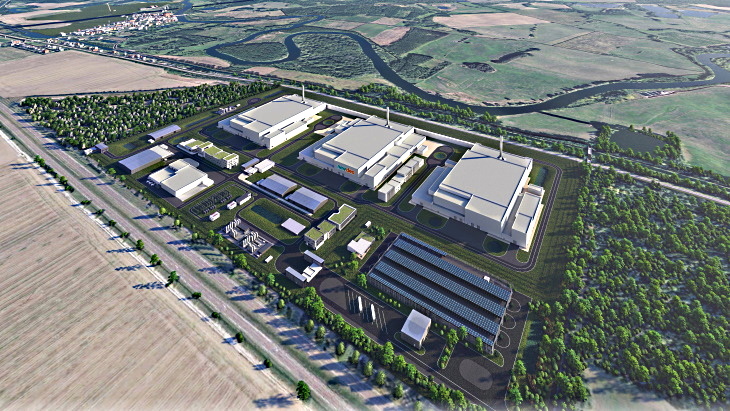
Newcleo submitted a Regulatory Engagement Plan to the US Nuclear Regulatory Commission (NRC) in August for its planned MOX fuel manufacturing facility in the USA. The Regulatory Engagement Plan sets out the proposed framework for the company's pre-application engagement with the NRC. It identifies the principal regulatory and technical topics that Newcleo expects to address with NRC staff, together with technical submissions and an indicative engagement schedule.
In March, Newcleo announced it had initiated pre‑application engagement with the NRC to support the future licensing of its first LFR-AS-200 lead-cooled fast reactor and an associated mixed-oxide (MOX) fuel fabrication facility in the USA. Following the submission of a letter of intent to the NRC on 23 February, Newcleo began early interactions with the NRC that were intended to familiarise NRC staff with the proposed facility designs and associated safety approaches for both the reactor and the MOX fuel fabrication facility. These discussions also supported the development of regulatory plans and facilitated NRC resource and budget planning, it said.
Reprocessing in the USA
In March 2022, the DOE launched the Converting UNF Radioisotopes Into Energy (CURIE) programme, which is under the auspices of the Advanced Research Projects Agency-Energy (ARPA-E), with the aim of enabling commercially viable reprocessing of used nuclear fuel from the current US light-water reactor fleet by resolving key gaps and barriers in reprocessing technologies, process monitoring, and facility design. Later that year, twelve projects were selected to receive USD38 million of funding.
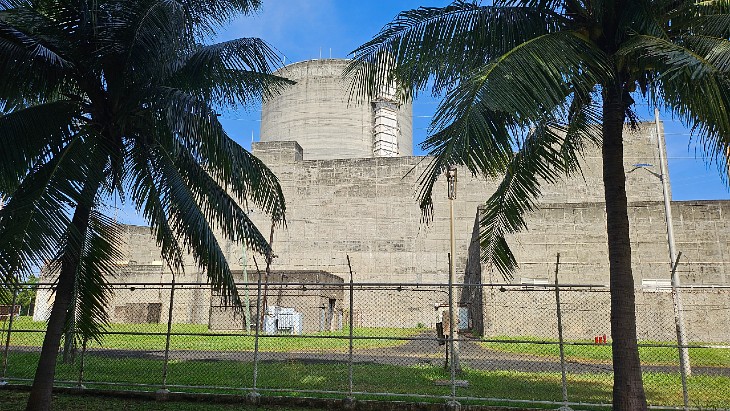
Reprocessing of used fuel from commercial reactors has been prohibited in the USA since 1977, with all used fuel being treated as high-level waste. However, the nation has more than 250 plant-years of reprocessing operational experience, mostly from reprocessing oxide fuels at government-operated defence plants as part of its military programme. A civil reprocessing plant at West Valley, New York, operated successfully from 1966-1972: a second one at Morris, Illinois, failed to work successfully and was declared inoperable in 1974. A third civil reprocessing plant was built at Barnwell, South Carolina but was not commissioned due to the changed government policy.