The country is stepping up efforts to introduce nuclear power into its electricity mix, with the government focusing on site assessments, regulatory readiness, financing arrangements and technology selection as it seeks to strengthen energy security and support its clean energy ambitions.
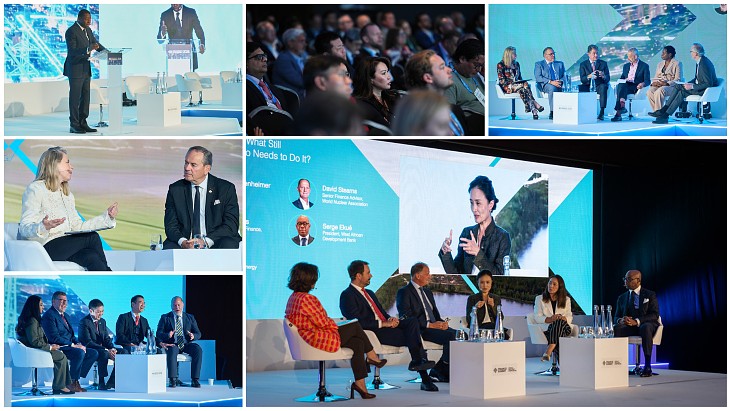
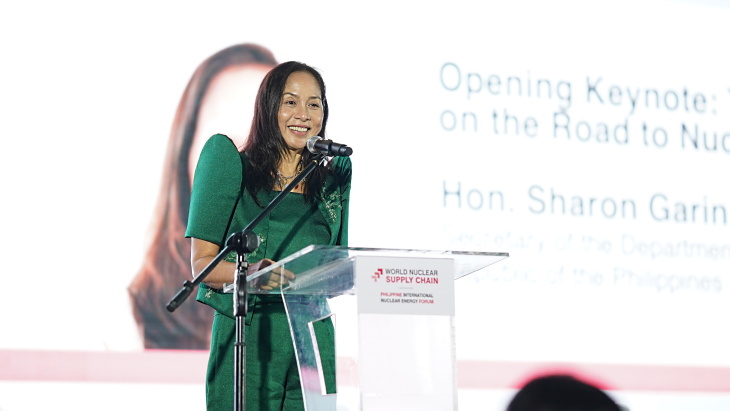
Opening the event, Energy Secretary Sharon Garin said rising electricity demand, exposure to imported fuels and the need for more diverse sources of generation were bringing renewed attention to nuclear power.
The International Energy Agency projects Philippine electricity demand to grow by an average of 3.6% annually, Garin said, with an economy growing at around 6%. She also pointed to regional energy security concerns highlighted by the conflict in the Middle East.
"Our peak electricity demand has reached 20.1 GW, while installed generating capacity stood at approximately 32.5 GW as of July 2026," she said. Net energy imports account for 51.5% of the country's total primary energy supply, leaving the economy exposed to global supply disruptions and price volatility. Garin added that 85% of the country's coal and 95% of its diesel were imported.
"These developments are bringing renewed attention to nuclear power as a reliable, low-carbon source of electricity," she said.
The government is positioning nuclear power as part of a broader generation strategy, alongside renewable energy, rather than as a competing technology.
Establishing the foundations
The Philippines' Department of Energy (DOE) is working to translate the country's nuclear ambitions into an implementable first project, said Patrick Aquino, director of the DOE's Energy Utilisation Management Bureau. The work includes assessing candidate sites, completing policy and regulatory arrangements, developing a procurement framework and establishing commercial conditions that would enable potential project developers to make informed investment decisions.
"For the Philippines, nuclear is a long-term national undertaking like any other country," Aquino said. Site development, financing, technology selection, nuclear safety, security and safeguards, and human resource development must progress together, he added. The objective is to establish a pathway for a first nuclear power plant that is safe, secure and economically viable, while contributing to the country's long-term energy security and clean energy goals.
The government is following the International Atomic Energy Agency's milestone approach to nuclear power development. Priorities include strengthening the legal, regulatory and institutional framework, emergency preparedness, radioactive waste management, workforce development and public engagement.
Garin also highlighted efforts to advance the operational readiness of the Philippine Atomic Energy Regulatory Authority and meet the country's international nuclear safeguards commitments.
The Philippines is drawing on government-to-government cooperation with Japan, the USA, South Korea and Hungary to support technical exchanges, strengthen nuclear safety and regulatory capabilities, and develop the specialist workforce needed for a national programme.
The country's nuclear ambitions build on the experience of the Bataan nuclear power plant, which was completed in the 1980s but never entered commercial operation. The project remains an important part of the country's nuclear history, although the government's current efforts are focused on establishing the institutional and commercial conditions for a future programme.
Capacity targets and the energy transition
The government's roadmap targets 1.2 GW of nuclear capacity by 2032, potentially increasing to 2.4 GW by 2035 and 4.8 GW by 2050, Garin said. The pace and scale of deployment will depend in part on the availability of small modular reactors (SMRs).
Nuclear power is expected to complement the country's renewable energy targets of at least 35% of electricity generation by 2030, 50% by 2040 and more than 50% by 2050.
"It is not a competition between nuclear and renewable, nor is it a competition with other technologies. They complement each other," Garin said.
Aquino said nuclear power was expected to play a role as the country transitions away from coal-fired generation. The Philippines introduced a moratorium on new coal-fired power plants in 2020, and the government is developing an energy transition plan to be integrated into the Philippine Energy Plan.
Renewable energy would continue to expand, with nuclear potentially providing firm, low-carbon generation to complement variable renewable sources and help meet demand as older coal plants are gradually retired. However, Aquino cautioned against expectations that nuclear power would automatically reduce electricity prices.
"We're not making any claims that bringing nuclear will magically bring down electricity prices," he said. Given the high upfront cost of nuclear projects, their economics must be assessed over their full life cycle.
The rationale for including nuclear in the energy plan was its potential to provide stable electricity generation with a high capacity factor, he said. Executive orders issued in 2020 and 2022 provided policy direction for integrating nuclear energy into the country's energy planning. Ultimately, deployment will depend on the enabling policies, regulatory certainty and commercial arrangements needed to make projects viable.
Private sector explores SMR options
Philippine power companies are also examining the potential role of nuclear energy in their future generation portfolios.
Emmanuel Rubio, president and CEO of Meralco PowerGen Corporation (MGen), said the company and its parent, Manila Electric Company (Meralco), believed a diverse generation portfolio was essential to optimising electricity costs and ensuring supply when it was needed.
"We believe that nuclear will be part of the Philippine portfolio, not just the Meralco portfolio," he said.
MGen has established its Nuclear Energy Strategic Transformation (NEST) programme as an umbrella strategy for its nuclear activities.
The company has secured a USD2.8 million grant from the US Trade and Development Agency (USTDA) and is working with engineering firm Sargent & Lundy on a feasibility study examining SMR deployment in the Philippines.
The study will assess potential sites and rank existing SMR technologies that could be considered for future projects. Rubio said an initial report covering shortlisted technologies and sites had been prepared, with the final study expected in the third quarter of 2027.
The findings are expected to provide an initial basis for further consideration of nuclear power investments.
Energy solutions and holding company Aboitiz Power Corporation is also evaluating nuclear energy as a potential addition to its generation portfolio.
Nicole Yazon, the company's vice president for strategy, said reliable and affordable electricity remained a priority for its customers and that nuclear had the potential to provide firm, low-carbon power. "The government is very clear in the direction that it has set, that they want to bring nuclear into the generation by the next decade, and we support that direction," she said.
She described the company as a potential long-term investor, while emphasising the importance of a disciplined approach to risk.
Developing a domestic supply chain
Alongside project development, the government wants to establish the industrial and human resource capabilities needed to support a nuclear programme over the long term.
Garin said this would require strong institutions, substantial investment, skilled professionals, qualified suppliers and reliable supply chains that meet international standards.
Developing local engineering and manufacturing capabilities, specialist services and opportunities for Filipino professionals and businesses to participate in the global nuclear industry would also be important, she said.
Hosting the World Nuclear Supply Chain conference demonstrates the government's interest in securing international support to move from policy ambition to actual power projects, Aquino said.
The Philippines' first nuclear project will require progress across several areas at once, including site development, financing, technology selection, regulation and workforce preparation. The government's ability to coordinate those elements, alongside the commercial decisions of potential investors, will determine how quickly its proposed programme advances.
"The Philippines is ready to do its part," Garin said. "We welcome the knowledge, experience, and partnership that each of you brings, and we look forward to working together to advance nuclear energy safely, responsibly, and sustainably."
The World Nuclear Supply Chain conference is organised by World Nuclear Association and is taking place in Manila on 20/21 October.