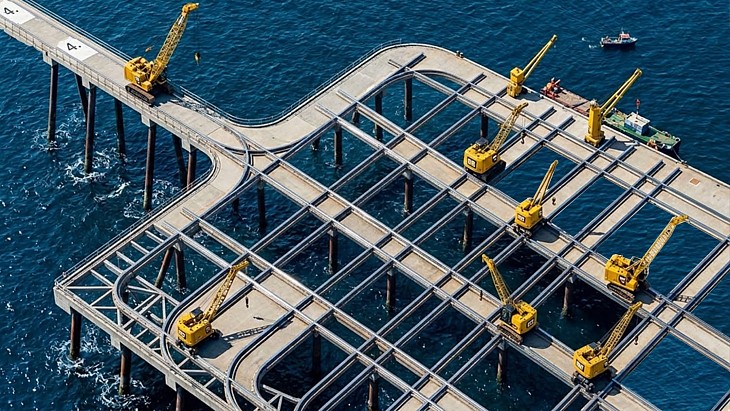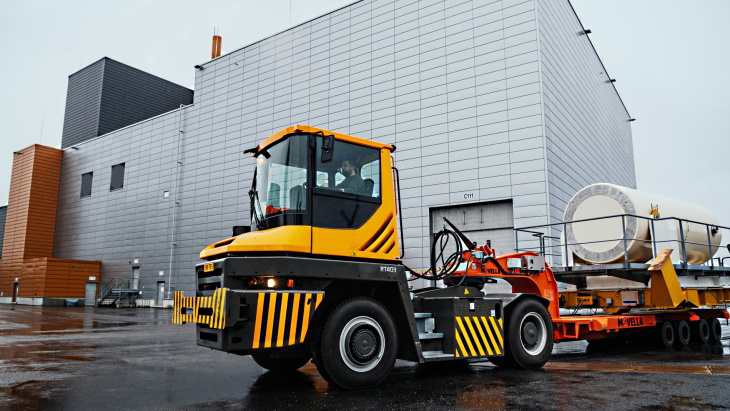
The encapsulation plant is part of Posiva's final disposal facility complex. Once the final disposal operation starts, used nuclear fuel will be transported from interim storage to the encapsulation plant where it will be packed into final disposal canisters made of copper and spheroidal graphite cast iron. From the encapsulation plant, the canisters will be transferred into the underground tunnels of the repository, located at a depth of 400-450 metres, and further into deposition holes lined with a bentonite buffer.
The transfer cask is a heavy cask designed specifically for the safe transport of used nuclear fuel. The cask has been used for several years in Finland to transport the used fuel from the nuclear power plants to the interim repository for used fuel at Olkiluoto. The test transport marked the first time the transport route continued all the way to Posiva's encapsulation plant, extending the transport distance from a few hundred metres to about three kilometres.
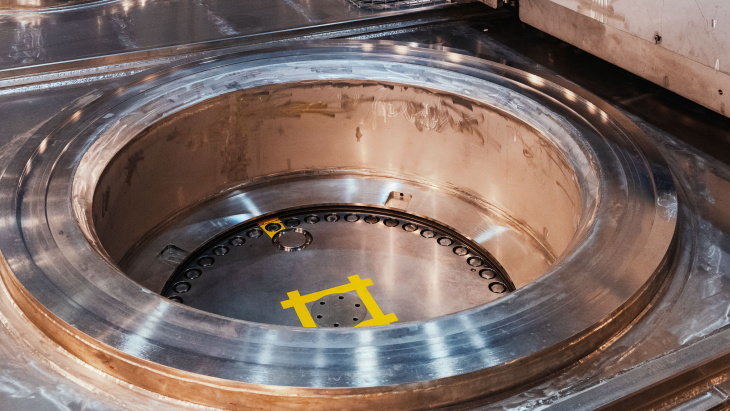
During the test, the transport cask was docked to the handling cell, where the actual handling of used nuclear fuel will take place once Posiva's disposal facility begins operations.
(Image: Tapani Karjanlahti / Posiva)
Posiva Operations Manager Pasi Rantamäki said: "Everything went well and there were no surprises. For the first time, the transfer cask was transported to the encapsulation plant, loaded to our own transfer trolley and handled with Posiva's equipment. Cooperation with TVO was also very efficient. Both companies were clearly committed to this test.
"Based on the test, we will make some minor adjustments to our equipment to ensure that the transfer cask can be handled even more smoothly."
"Although the cask did not contain actual fuel, the test run was a demanding process that required careful preplanning," added Posiva Director of Production, Karri Osara. "We managed to verify the operability of the systems, but it was just as important, if not more so, to see how well cooperation between the different organisations of the two companies worked in practice. A test like this combines technical competence with procedures and cooperation between people. And the great thing is that the overall process worked extremely well."
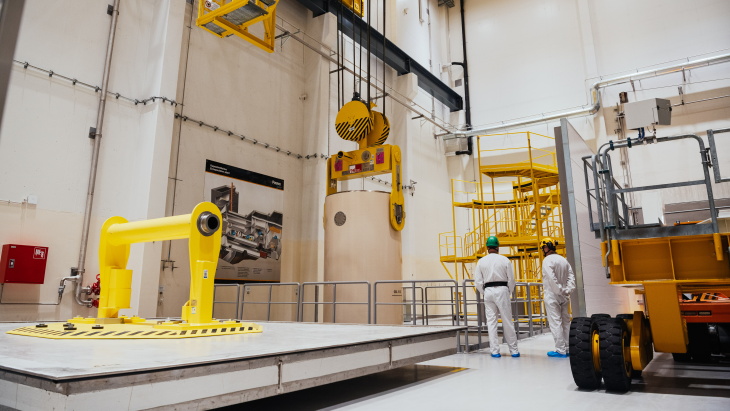
The test also provided valuable experience in the receiving and handling of the cask at the encapsulation plant and demonstrated Posiva's capabilities to receive the actual transfer cask. Following the successful tests, the transport cask was lifted back onto the transport vehicle.
(Image: Tapani Karjanlahti / Posiva)
The successful test transport of the transfer cask was part of the ongoing extensive series of commissioning processes and tests. These are designed to verify that the encapsulation plant is ready for the start of production operation. This phase is implemented in accordance with a precise plan, literally one step at a time.
Rantamäki said there will be another test run of the transfer cask, taking things even further in terms of cask handling and testing the operation of the fuel transfer machine using the fuel positions of an actual transfer cask. For this test - the timing of which has yet to be determined - the procedures designed for the controlled area must also be activated.
Posiva submitted its application, together with related information, to the Ministry of Economic Affairs and Employment in December 2021 for an operating licence for the used fuel encapsulation plant and Onkalo final disposal facility. The company applied for an operating licence for a period from March 2024 to the end of 2070. The encapsulation plant and final disposal facility are intended for the used nuclear fuel generated by TVO's Olkiluoto and Fortum's Loviisa nuclear power plants. The operating licence was granted last month but the facilities have yet to be commissioned.
The amount of used nuclear fuel to be disposed of corresponds to approximately 3,300 disposal canisters. Once operations are fully established, the plan is to dispose of a maximum of 60 canisters annually at the plant. The final disposal operations are estimated to continue until the 2120s, after which the repository will be backfilled and closed.