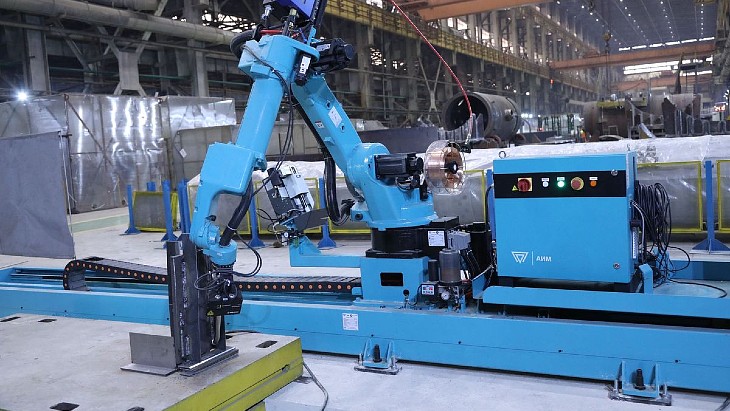
ZiO-Podolsk, based in St Petersburg, has begun using a welding robot for supports for nuclear power plant heat transfer equipment. It plans to manufacture 164 supports - each involving about 80 welds - during 2026, and says that work which might have been expected to take 16,000 hours will now take 4,000.
It says that a robot "does not get tired and works without breaks" and works "faster than a human and with higher accuracy", with the additional benefit that specialists can be freed from "monotonous" work and focus on more complex tasks where a creative approach is required.
Anton Lebedev, head of ZiO-Podolsk, said: "Implementation of robotic solutions is not just modernisation, but investments in the future. The robot exceeded all our expectations." He said that not only had it increased welding capacity, but the quality had also reduced the follow-up load on locksmiths and welders.
Among the other 30 projects, JSC CDBMB in the Leningrad region last year launched a robotic welding project for elements of pumping equipment for nuclear power plants, which is said to have allowed a near-doubling of the speed of welding work.
And the Atommash plant in Volgodonsk launched a spider robot for ultrasonic testing of welded connections of reactors and steam generators, which Rosatom says speeds up quality control operations.


_29695_19459.jpg)
_98552.jpg)
_1_12560.jpg)
_22582.jpg)


_84289_33276.jpg)