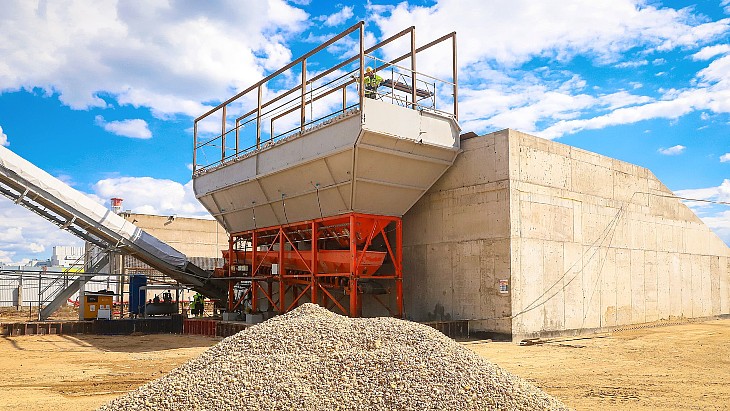
Ivan Sidorov, Director of the Smolensk Nuclear Power Plant, told a task force meeting that contractor Titan-2's concrete mixing facility was ready for the pouring of first concrete, which is scheduled for March 2027.
He said: "The commissioning of each facility marks a step toward the main construction phase. Safety, occupational health, and injury prevention are the absolute top priorities on the construction site. There's nothing more valuable than people's health and lives. Providing the construction site with heat, water, and electricity is a top priority."
Pavel Tkachenko, Deputy Director of the Smolensk NPP-2 Construction Program at Titan-2, said: "Our own concrete mixing facility allows us to speed up work and fully control the quality of concrete at all stages - from mixing to pouring it into the foundation. Our first concrete mixing plant can produce 120 cubic metres per hour. A team has already been formed and trained: control room operators, concrete quality control laboratory specialists, batchers, and repairmen. During peak periods, approximately 40 people will be working here 24/7."
More than 200 people are currently employed at the site, with that number expected to rise to 700 over the next year. In April a meeting was held with Belarusian companies about the role they could play in the construction project. Belarus shares a border with the Smolensk region.
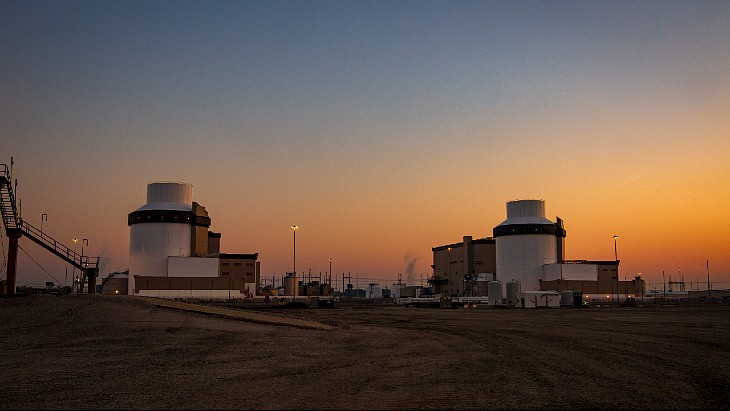
Smolensk nuclear power plant is around 350 km west of Moscow. It currently has three RBMK-1000 power units, which were connected to the grid, respectively, in 1982, 1985 and 1990. Each has an electrical capacity of 1,000 MW. They have each had their operating licences extended to 45 years.
Under Russia's proposed new nuclear programme, two VVER-1200 units are planned for the new phase of the Smolensk plant, to be commissioned in 2033 and 2035. They are scheduled to operate for 60 years, with potential life extensions up to 120 years.


_51287.jpg)
_82983_12913.jpg)