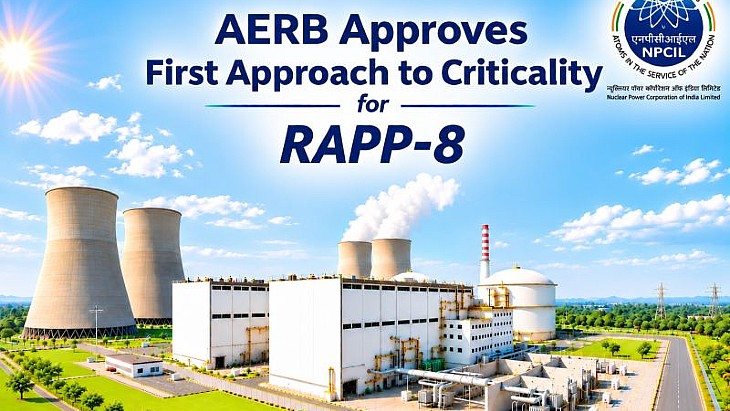
The Atomic Energy Regulatory Board (AERB) said it had granted permission for the First Approach to Criticality for the 700 MWe pressurised water reactor, also known as RAPP unit 8, on 19 November "following satisfactory completion of the requisite safety reviews".
This follows a comprehensive safety review of the reactor's design, construction, commissioning test results and operational preparedness, and a regulatory review which included detailed assessments by AERB and its safety review committees, as well as regulatory inspections.
First Approach to Criticality marks an important stage in the commissioning of RAPP-8, paving the way for subsequent commissioning phases leading towards commercial electricity generation, subject to satisfactory completion of the prescribed tests and requisite regulatory permissions, AERB said.
RAPP 8 is the second of two Indian-designed 700 MWe pressurised heavy water reactors (PHWRs) built as a pair at the Rajasthan Atomic Power Project, and the fourth in a series of sixteen such units being set up in the country. RAPP unit 7 reached full power earlier this year after reaching first criticality in September 2024 and being connected to the grid in March 2025. Nuclear Power Corporation of India Ltd (NPCIL) began loading fuel into the unit on 19 September.
Kaiga 1 restart
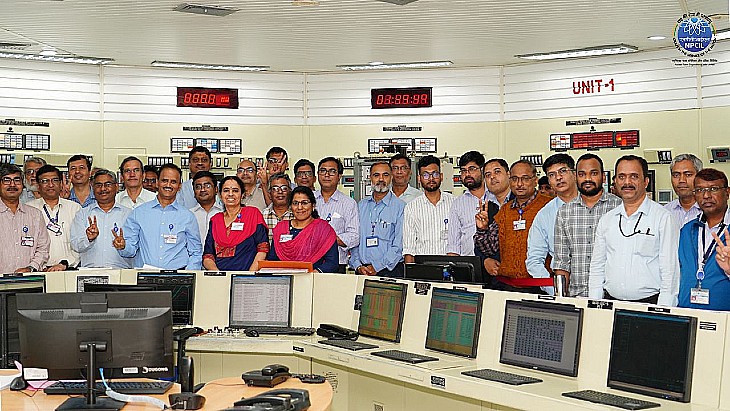
Marking Kaiga 1's return to criticality in the control room (Image: NPCIL)
Meanwhile, another Indian PHWR - Kaiga unit 1 - has restarted after undergoing major refurbishment.
The 200 MWe unit, which was first connected to the grid in 2000, "successfully attained criticality early morning of 22nd November 2026", NPCIL said.
The unit was shut down to begin the project to replace the coolant channels and feeders on 1 April 2025. The work involved defuelling the reactor; draining it of the heavy water that provides its coolant and moderator; the removal and replacement of coolant channels; in-core inspections; installation and inspection of new coolant channels; then reloading, leak testing, heavy-water filling, hydrotesting, hot conditioning and finally the approach to reactor criticality.
Accomplishing this in just 600 days means Kaiga unit 1 "has set a new fleet-wide benchmark as the first NPCIL reactor to reach criticality in such a short span", NPCIL said.