"Today, during a control rod withdrawal test at unit 6 conducted as a pre-reactor start-up check, the withdrawal prevention function would normally be activated if a control rod is selected while another control rod is withdrawn. However, we confirmed that an alarm indicating this function was activated but did not sound," the utility announced on 17 January. "As a result, the withdrawal test was suspended, and the withdrawn control rod was returned to its fully inserted position."
The following day, Tokyo Electric Power Company (Tepco) said: "As a result of the investigation, we discovered an error in the settings for the second control rod withdrawal prevention function. Therefore, we corrected the settings and confirmed that an alarm indicating the prevention function was working was sounded. Therefore, we determined that the reactor had recovered from the deviation from operational limits at 8:16pm on 18 January. Furthermore, since we have recovered from the deviation from operational limits, we are now able to check the operation of all control rods. Going forward, we will confirm that alarms are sounding properly for all control rods."
Media reports said that Tepco had taken the decision to delay the restart of the reactor. "Although the problem has been resolved, the company apparently judged it necessary to exercise caution in the restart-related work," Jiji Press reported.
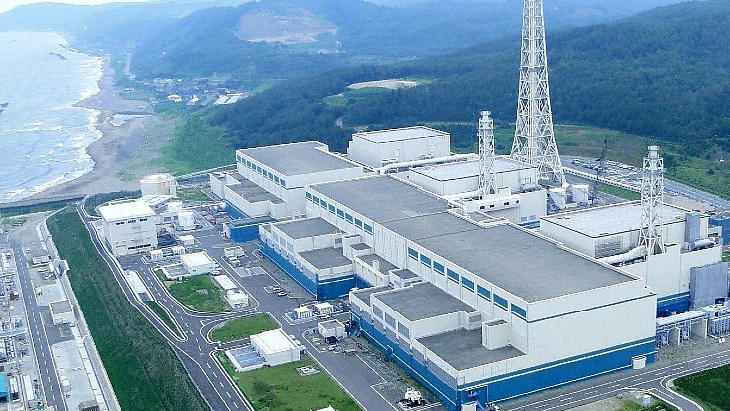
The seven-unit Kashiwazaki-Kariwa plant was unaffected by the March 2011 earthquake and tsunami which damaged Tepco's Fukushima Daiichi plant, although the plant's reactors were previously all offline for up to three years following the 2007 Niigata-Chuetsu earthquake, which caused damage to the site but did not damage the reactors themselves. While the units were offline, work was carried out to improve the plant's earthquake resistance. All units have remained offline since the Fukushima Daiichi accident.
Although it has worked on the other units at the Kashiwazaki-Kariwa site, Tepco is concentrating its resources on units 6 and 7 while it deals with the clean-up at Fukushima Daiichi. These 1356 MWe Advanced Boiling Water Reactors began commercial operation in 1996 and 1997, respectively, and were the first Japanese boiling water reactors to be put forward for restart. Tepco received permission from the Nuclear Regulation Authority to restart units 6 and 7 in December 2017. Restarting those two Kashiwazaki-Kariwa units - which have been offline for periodic inspections since March 2012 and August 2011, respectively - would increase the company's earnings by an estimated JPY100 billion (USD638 million) per year.
Tepco is prioritising restarting Kashiwazaki-Kariwa unit 6, where fuel loading was completed in June last year. The company has until September 2029 to implement anti-terrorism safety measures at unit 6. Kashiwazaki-Kariwa 6 would become the first reactor owned by Tepco to restart following the Fukushima Daiichi accident.


_55605.jpg)