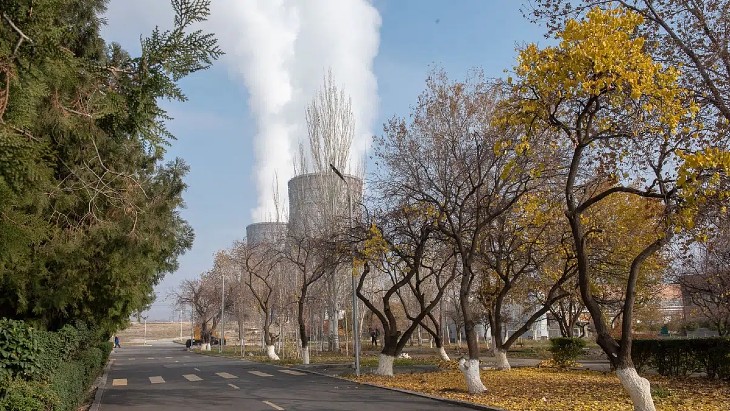
Rosatom said that work carried out by the plant operators and its experts during 2025 included assessing the adequacy of the plant's fire protection system and the technical condition and remaining service life "of safety-critical systems and components, building structures, and NPP buildings and facilities".
Work has also begun "to define a new configuration for the emergency core cooling system to expand the scope of design-basis accidents". The life extension project aims to extend the unit's life to 2036 and improve the plant's safety level by establishing a new maximum design-basis accident limit.
In addition, samples have been sent for specialist assessment - due by November 2026 - which "will form the basis for an assessment of the condition of the reactor pressure vessel metal and will be used to justify the future safe operation of the power unit".
Rosatom said: "Work is currently in the active phase to redefine the service life of the equipment and pipelines of the reactor unit to 2031. A preliminary assessment of the remaining service life has already been completed and indicates that the non-replaceable and non-repairable equipment of the nuclear power plant has the resource to continue operation beyond the additionally justified service life of the unit."
The Armenian Nuclear Power Plant comprises two Russian-built 376 MWe VVER reactors which started operating in 1976 and 1980, respectively. Both units were taken offline in 1988 due to safety concerns regarding seismic vulnerability, although they both continued to operate and had not sustained any damage in a major earthquake in the region earlier that year. Unit 2 was restarted in 1995, and is subject to ongoing safety improvements. Unit 1 is now being decommissioned.
In November 2021, it was announced that the service life of unit 2 at the plant had been extended to 2026 after collaboration with Rosatom which saw the unit's emergency cooling system, engine room, turbines and steam generators modernised, and a unique operation was carried out to anneal the reactor pressure vessel. This restored the properties of the vessel metal by 85%, ensuring the possibility of its further operation. The operator has requested an additional 10-year operating licence.
An International Atomic Energy Agency Safety Aspects of Long-Term Operation (LTO) peer review mission to Armenia in October identified areas of good performance to be shared with the nuclear industry globally, including: continuously improving organisational practices, adopting international best practices and experience from the first LTO period to improve the approach and documentation for the upcoming second LTO period; conducting periodic reviews of the seismic qualification programme, considering the latest knowledge and international operating experience; and implementing a comprehensive modernisation process performed by the staff of the plant.
The team also provided suggestions and recommendations to further improve safe LTO, for example, the plant should: update the existing plant programmes to fully address ageing management for the upcoming second LTO period; complete the qualification programme for equipment in harsh environments and fully implement it for LTO; and effectively implement the ageing management programmes for civil structures.


_42570.jpg)