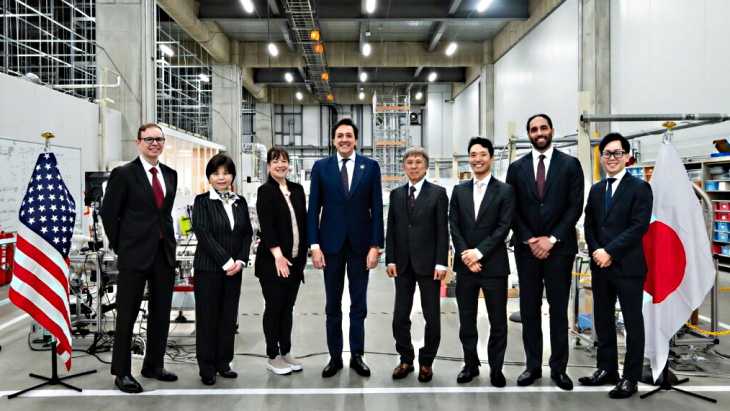
Anchoring the strategic partnership, Kyoto Fusioneering (KF) and Oak Ridge National Laboratory (ORNL) have established a new public-private partnership that leverages each institution's expertise in fusion technology to accelerate the deployment of commercial fusion power.
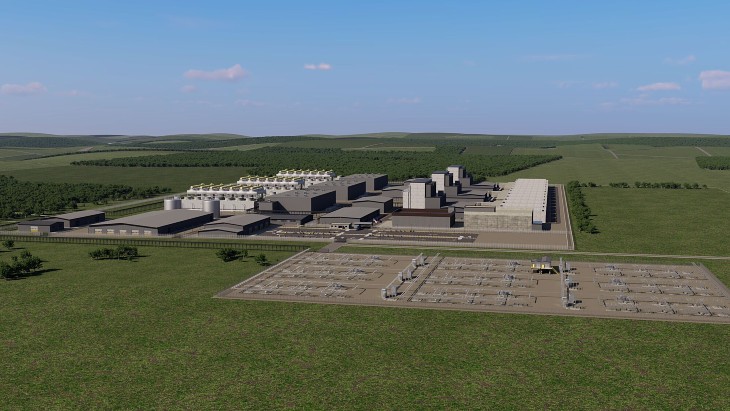
The agreement includes working towards the creation of UNITY-3, a world-leading breeding blanket test facility capable of testing blanket concepts in prototypic fusion nuclear conditions. The UNITY-3 facility is designed to validate tritium breeding blanket performance with prototypic neutrons and component geometries, a critical step towards delivering commercial power plants. Underscoring the urgent market demand for this capability, the initiative has garnered strong industry endorsement from ten partners, including from seven leading US fusion development programmes. UNITY-3 will be sited at ORNL in Tennessee.
UNITY-3 will complement Kyoto Fusioneering and its partners' existing Unique Integrated Testing Facility (UNITY) Programme, which includes the UNITY-1 blanket and thermal cycle test facility operating in Kyoto, Japan, and the UNITY-2 deuterium-tritium fuel cycle facility under construction in Chalk River, Canada.
"Fusion energy represents a transformational opportunity for our energy future," said Darío Gil, DOE Under Secretary for Science. "This partnership reflects DOE's commitment to working with trusted allies and the private sector to build critical infrastructure, strengthen American competitiveness, and deliver real, measurable progress toward making fusion energy a reality."
"The United States and Japan share a long history of close cooperation in science and technology," added Satoshi Konishi, Co-Founder and CEO of Kyoto Fusioneering. "Through this strategic partnership with DOE, we are proud to contribute KF and Japan's fusion technology and engineering expertise to advance fusion nuclear science, reduce risk for fusion power plants, and support the long-term success of the US and Japanese fusion ecosystems."
Kyoto Fusioneering was spun out of Kyoto University in 2019 as Japan's first fusion start-up, to develop advanced technologies for commercial fusion reactors building on decades of university research. One of the advanced technologies the company is developing for commercial fusion reactors is tritium fuel cycle technologies and breeding blankets for tritium production and power generation.
ORNL and KF have ongoing collaborations through DOE's Innovation Network for Fusion Energy (INFUSE) programme, which involves evaluating the effect of lead-lithium mixtures for fusion blankets, and DOE's Fusion Innovation Research Engine (FIRE) Collaborative programme, where KF's UNITY-1 facility will contribute to the ORNL-led Blanket Collaborative on Test Facilities project by investigating liquid metal blanket concepts.



_55605.jpg)