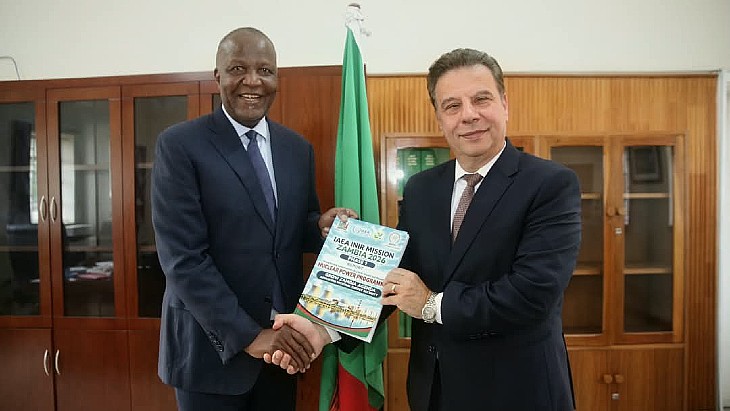
Minister of Electricity Peter Kapala said: "As we pursue our national ambition to expand electricity generation capacity by 10,000 megawatts, nuclear energy offers a potential source of reliable, low-carbon baseload power. Zambia remains committed to developing its nuclear power programme responsibly, in accordance with international safety, security and safeguards requirements and the standards established by the International Atomic Energy Agency (IAEA)."
Zambia's Minister of Technology and Science Felix Mutati said the IAEA mission was an important part of the country's plan to expand its energy capacity.
"Zambia is following a structured process for nuclear power. In 2025, the Cabinet approved in principle the continuation of the nuclear power programme and instructed all relevant institutions to do the preparatory work needed for the various phases of the programme," he said, adding that the Integrated Nuclear Infrastructure Review (INIR) mission was "very valuable for planning our next steps".
The country is looking to not only expand its energy capacity, but also wants to reduce its dependence on hydropower as it seeks reliable, low-carbon sources of electricity to support industrialisation, economic growth and sustainable national development.
The IAEA mission took place in the first week of November and featured five experts from Egypt, Kenya, Morocco, Russia and South Africa, as well as four IAEA staff.
Good practices which would benefit other countries developing nuclear power were identified in the areas of: regional knowledge sharing with other African countries to support the transition of Zambia's Radiation Protection Authority into a nuclear regulatory body; the early introduction of postgraduate university programmes to support capacity building for the programme; and engagement of the national census organisation when conducting public opinion surveys.
John Haddad, Senior Nuclear Engineer of the IAEA Nuclear Infrastructure Development Section and Team Leader for the mission, said: "Zambia has made good progress in developing the infrastructure for a nuclear power programme ... has initiated related studies and policies, institutional, legal and international cooperation measures, and has implemented renewed coordination arrangements. The work done reflects strong Government support and effective coordination among all institutions involved in the nuclear power programme."
Recommendations and suggestions made by the IAEA team included "strengthening the coordination mechanism for the programme, finalising the comprehensive report and related studies needed for establishing the national strategy, enhancing the national legal framework and defining funding and human resource requirements for the various phases of the programme".
The outcomes of the mission will help the IAEA and Zambia develop an "integrated work plan to continue providing coordinated support in line with the future development of the country's nuclear power programme".