Molten salt reactors (MSRs) rely on pumps to circulate liquid fuel or coolant at temperatures exceeding 600°C for years at a time. Demonstrating long-term, stable pump operation is therefore a prerequisite for regulatory approval and commercial deployment, the company said.
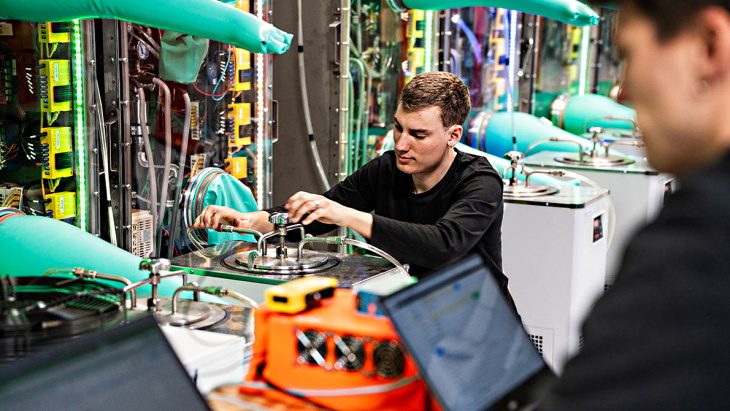
The pump that has been tested is part of Copenhagen Atomics' pumped molten salt loop platform, a fully integrated test system designed to replicate the thermal, chemical and mechanical conditions found in future reactors, but without nuclear fission. By operating multiple molten salt loops in parallel, the company can accumulate operating hours, iterate designs, and generate statistically meaningful reliability data for pumps, valves, heat exchangers and sensors. Across the company's test infrastructure, Copenhagen Atomics has now accumulated more than 100,000 hours of combined pump runtime, and many pumps have exceeded one year of runtime.
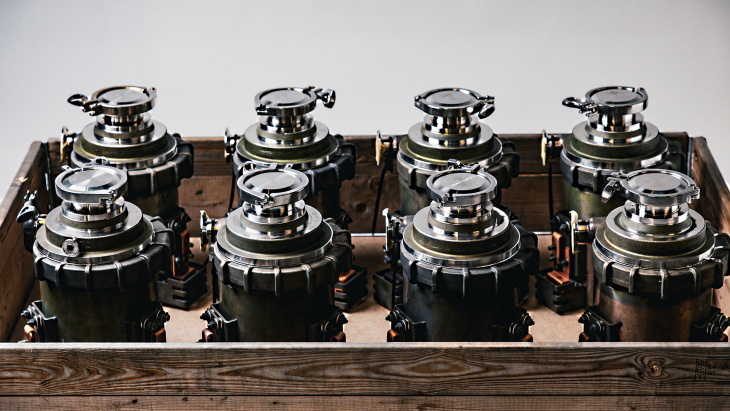
Molten salt pumps developed by Copenhagen Atomics (Image: Copenhagen Atomics)
Copenhagen Atomics designs and builds its pumps, control electronics, sensors and test loops in-house, and produces highly purified molten salts at tonne scale. "This vertically integrated approach allows the company to run long-duration tests at a fraction of the cost typically seen at national laboratories or large research facilities," it noted.
The company said the two-year continuous run "demonstrates that molten salt pumps can operate stably over timescales relevant to future commercial reactors, which is a key hurdle for the technology as a whole".
"Component reliability is not something you prove once, it has to be proven repeatedly over long periods and under realistic conditions," said Copenhagen Atomics CEO and co-founder Thomas Jam Pedersen. "Running a molten salt pump continuously for two years is a major technical milestone, and it confirms that our approach to design, materials, salt purity and testing works as intended."
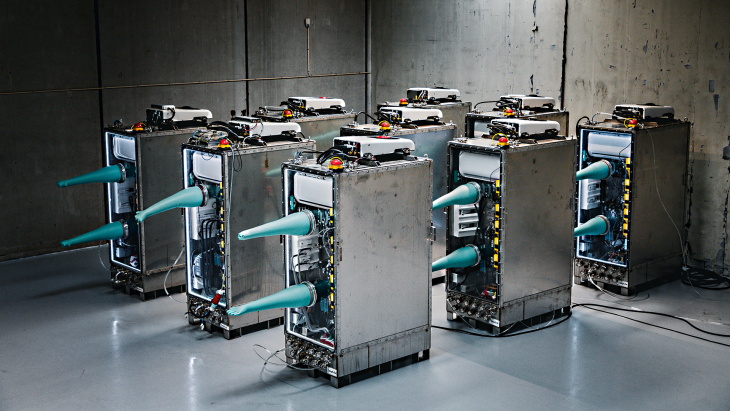
The development plant of Copenhagen Atomics in Søborg, Copenhagen (Image: Copenhagen Atomics)
"For regulators, data matters. Not optimism or simulations. Long-duration component testing dramatically reduces risk later in the development process. Finding and fixing issues in a test loop is orders of magnitude cheaper than discovering them in a prototype reactor."
Copenhagen Atomics said it plans to continue expanding its test capacity over the coming years, with the long-term goal of operating dozens of molten salt loops in parallel, both in Copenhagen and with partner institutions. The company is building and testing full-scale non-nuclear prototypes of the reactor in Denmark and is currently collaborating with the Paul Scherrer Institute in Switzerland to prepare for the first nuclear test of the reactor.
Copenhagen Atomics is developing a containerised molten salt reactor. Moderated with unpressurised heavy water, the reactor consumes nuclear waste while breeding new fuel from thorium. Small enough to allow for mass manufacturing and assembly line production, the reactor has an output of 100 MWt. Copenhagen Atomics' goal is to deliver energy at a levelised cost of just EUR20 (USD23.5) per MWh.
The company's thorium reactors are expected to consume the transuranic elements in used nuclear fuel from conventional nuclear reactors, which radically reduces the amount of long-lived radioactive waste. To achieve this, Copenhagen Atomics intends to separate used nuclear fuel from light water reactors into four streams: zircaloy, uranium, fission products and transuranics. Its reactor designs can make use of plutonium (a transuranic) to 'kickstart' the use of thorium.


_55605.jpg)