_77863.jpg)
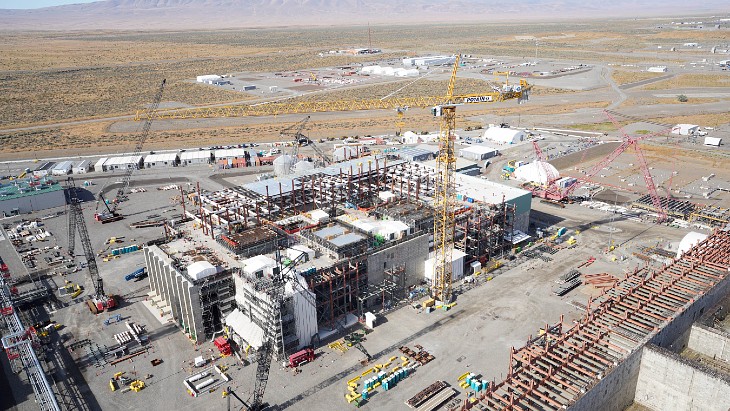
Regulatory, engineering, and construction planning progress over the past year has positioned Phoenix in a "construction-ready state", the company said, and has confirmed an expected 2-year construction timeline. Provided final regulatory approvals to commence construction are received in the first quarter of 2026, "targeted first production remains on track for mid-2028".
The company has also issued an updated estimate of post-final investment decision (FID) initial capital costs for the project, of CAD600 million (USD437 million). The updated capital expenditure figure is a 20% increase relative to the previous estimate in the 2023 Phoenix feasibility study, when adjusted for inflation, but the project is now in a construction-ready state and no further adjustments to the figure are expected prior to commencement of construction, the company said.
Denison President and CEO David Cates said the company "stands ready" to make the FID and begin construction of the mine following the recent conclusion of a Canadian Nuclear Safety Commission public hearing and receipt of an initial approval to commence construction activities from the Province of Saskatchewan.
"Owing to years of work de-risking and advancing Phoenix, the project is now ready to become the first new large-scale uranium mine built in Canada since Cigar Lake, with first production expected by mid-2028," he said, adding that the timeline positions Phoenix to benefit from an anticipated acceleration in uranium demand based on increasingly widespread global adoption of nuclear energy, as well helping reinvigorate Canada's natural resources sector.
"Based on our strong balance sheet, and the advanced state of project engineering, construction planning, and procurement activities, we are confident that we will be able to make a positive final investment decision following receipt of final regulatory approvals. While our estimate of initial capital costs has increased modestly from the 2023 Phoenix feasibility study, it is important to note that the project is now ready for construction, continues to have only a two-year construction schedule, and that the updated costs are the basis for our project Control Budget - meaning that there are no further revisions expected prior to the commencement of construction," Cates said.
Phoenix is part of the Wheeler River project, described by Denison as the largest undeveloped uranium project in the infrastructure-rich eastern portion of the Athabasca Basin region, in northern Saskatchewan. The project is host to the high-grade Phoenix and Gryphon uranium deposits, discovered by Denison in 2008 and 2014, respectively, and is a joint venture between Denison (90%) and JCU (Canada) Exploration Company Limited (10%). Denison is the operator.
In-situ recovery (ISR) - also referred to as in-situ leach - is a method of recovering uranium minerals from ore in the ground by dissolving them in situ, using a mining solution injected into the orebody. The solution is then pumped to the surface, where the minerals are recovered from the uranium-bearing solution. More than half of the world's uranium production is now produced by such methods. The technique - which requires a geologically suitable orebody - has not so far been used in Canadian uranium operations, although in addition to the Phoenix deposit Denison has been investigating the potential for using ISR at other Canadian projects including the Heldeth Túé uranium deposit at Waterbury Lake and the Midwest Main project.


_81127(1)_29377.jpg)
_42570.jpg)