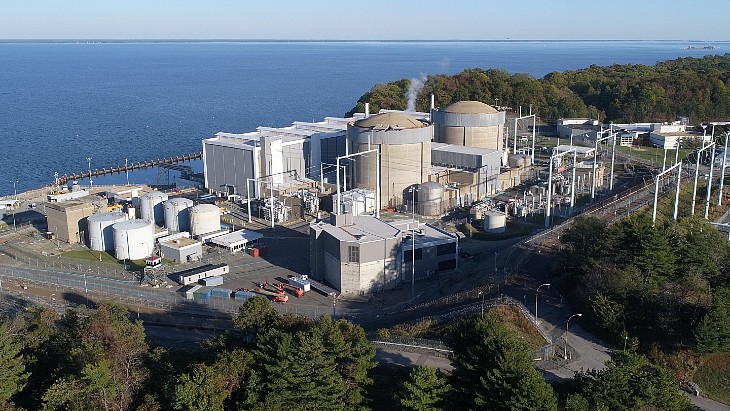
In an update on Saturday the plant operators Magyar Villamos Művek (MVM) said: "Due to the rise in the water level of the Danube in recent days, as well as the construction of the bottom sill, the technical conditions for safe and sustainable operation allow our specialists to begin the start-up and gradual loading of the previously shut-down units … one of the turbine generators of unit 3 was connected to the grid at 23:00 on 22 August, the first of the units to be shut down and the load on the unit began."
On Sunday it announced that unit 1 was being restarted and would be operating at nominal power from Sunday evening, before adding that unit 3 would operate at nominal power on Tuesday.
The prime minister, in a briefing at the site on Saturday, said that seven of the eight cold water pumps from the river were operating again and the four-unit nuclear power plant was expected to reach its nominal capacity of 2 GW by Wednesday.
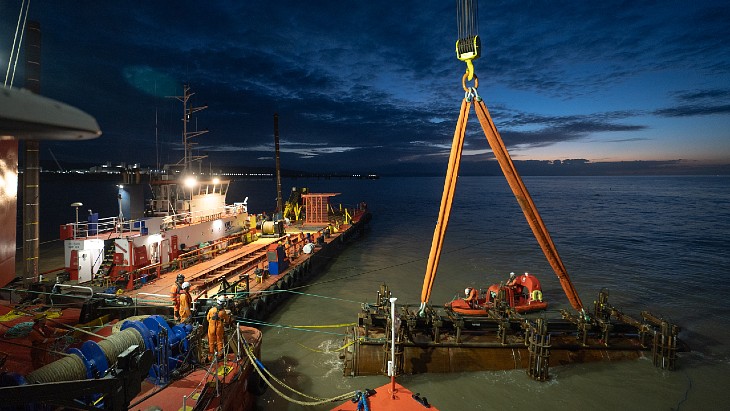
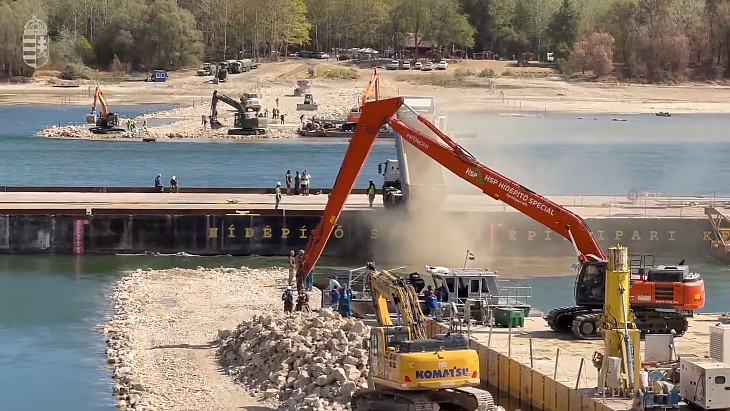
Magyar said that work on the construction of the bottom weir between the Paks plant and the village of Dunaszentbenedek was ahead of schedule, with just 150 metres left to be built. In total 33,500 tonnes of stone had left the country's mines for the work, which will include narrowing the Danube riverbed.
Magyar added: "Everyone saw what was happening this summer: a record drought and record low water levels reached our country, bringing scorched landscapes, forests, and fields. After this, we can never bury our heads in the sand again, as we are probably past the twenty-fourth hour to save Hungary from the consequences of the climate crisis.
"We will submit a climate law; we will submit a water and energy management law; and we will examine what needs to be done to be able to retain as much water as possible in Hungary, what reservoirs need to be built so that as much water as possible can be available to people, agriculture, and companies throughout the year."
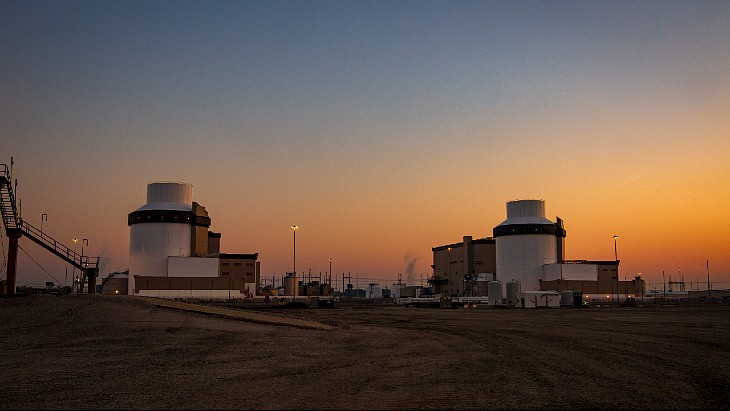
The Paks plant, 100 kilometres south of Budapest, currently comprises four Russian-supplied VVER-440 pressurised water reactors, which started up between 1982 and 1987 and generate about half the country's electricity. Construction work has also begun on the first of two new VVER-1200 reactors planned at the neighbouring Paks II site.
MVM has explained that there are no safety issues relating to the low water level - the issue has been that the river's water level had fallen so far below its ever-expected lows, that it was below the suction level of the pumps, so they "could not perform their task".
Romania
The low water levels on the River Danube forced the precautionary shutting down of Romania's Cernavoda nuclear power plant - the first unit at the end of last month and the second unit on 13 August.
The second unit's shutdown came despite the energy ministry using explosives to remove a rock obstruction, dredging the river bed and sinking four rock-filled barges, which reportedly raised water levels around unit 2 of the plant by 4 centimetres. But on the morning of 12 August, the water level in the Danube had reached 182 centimetres - below the 185-centimetre mark required for the normal operation of the Cernavoda plant.
Cernavoda is the only nuclear power plant in Romania and consists of two 650 MWe Candu reactors, generating about one-fifth of its electricity. Unit 1 went into commercial operation in 1996 and unit 2 in 2007.
On Saturday the National Committee for Emergency Situations approved a series of new measures including emergency dredging works and "also in the Cernavoda area, on the course of the Old Danube, Apele Române will build an aqueduct that will divert part of the body of water towards the Danube - Black Sea canal and, thus, towards the area that ensures the water intake for the cooling systems of the Cernavoda NPP".
It added: "In the area, the Department for Emergency Situations will mobilise high-capacity pumps provided by several institutions, in order to maintain - if necessary - the water level necessary for the operation of the Cernavoda NPP."
Bulgaria
In Bulgaria, Energy Minister Iva Petrova has said a 250 to 300-metre-long levee is to be built on the Danube near the Kozloduy Nuclear Power Plant over the next 10 days or so.
Unit 5 of the plant - one of the two operable units - reduced its output by about 10% on Friday because of the conditions and said on Monday that the "slight rise in the level of the Danube River is the good news of the day. This makes it possible at this point to keep the power plant operating as we announced on Friday. The hydrological situation continues to be complicated ... it is important to maintain the level of the river. The forecasts I watched this morning are encouraging - for retention and a slight rise in the river level within this week".
She said seven options had been identified to tackle the situation and said "work is under way on a project to build a dam in the area of the power plant. Other options are also being investigated, including transferring water quantities from internal reservoirs to the power plant". Kozloduy units 1-4 were VVER-440 models, which the European Commission classified as non-upgradeable, and Bulgaria agreed to close during negotiations to join the European Union in 2007. Units 5 and 6 feature VVER-1000 reactors that were connected to the grid in 1987 and 1991, respectively. Both units have been through refurbishment and life-extension programmes to enable extension of operation from 30 to 60 years. The country's two operable reactors generate about one-third of its electricity.
The water is used to cool the steam in the condensers in the conventional part of the power plant, not to cool the nuclear reactors.


_51287.jpg)