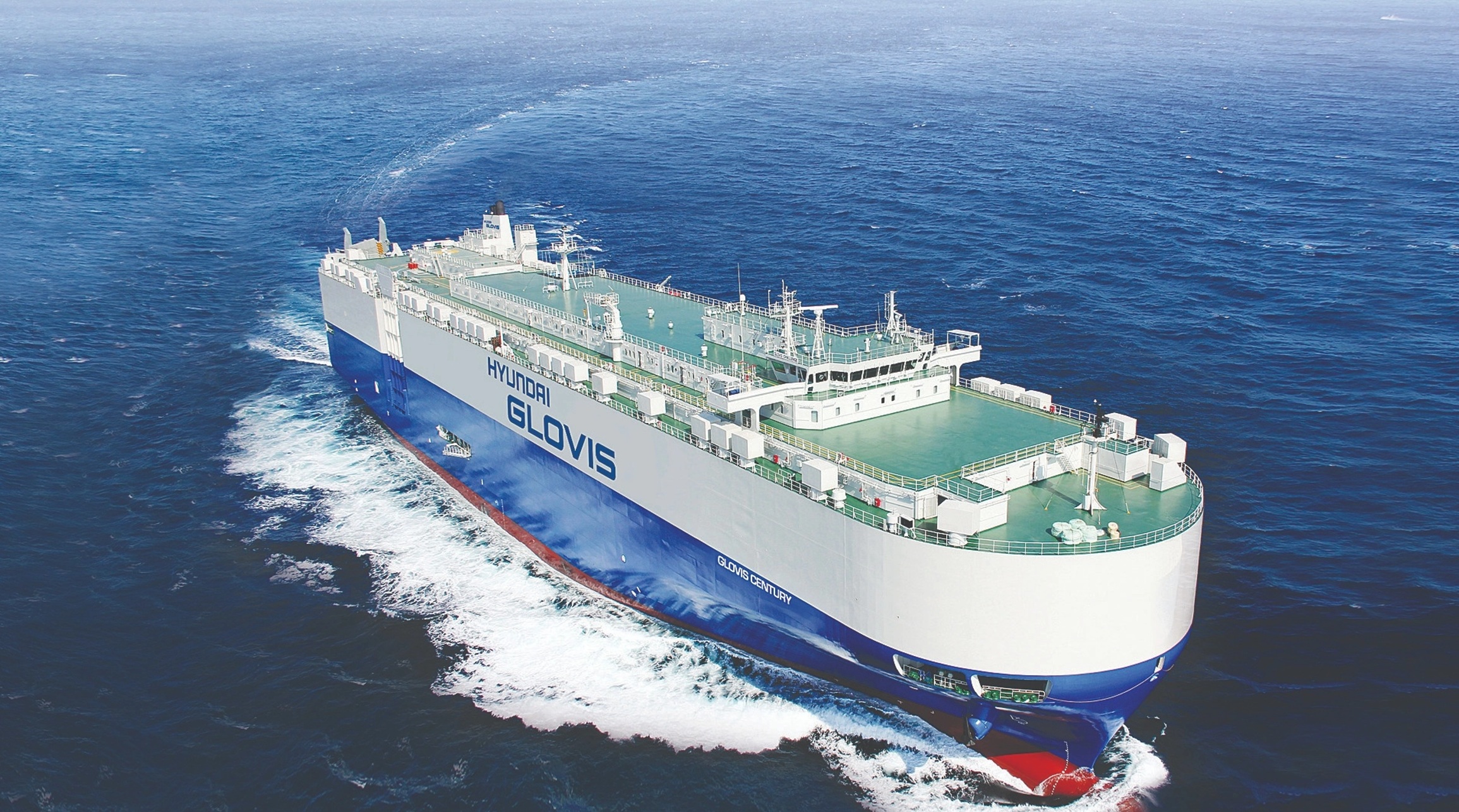
Approval in principle is a symbolic procedure in which a classification society reviews the design or technology of a new ship and recognises it as compliant with international regulations and safety standards, serving as the first step toward actual ship development.
Lloyd's Register said it is working with Hyundai Heavy Industries, HD Korea Shipbuilding & Offshore Engineering (HD KSOE), Hyundai Glovis, G-Marine Service and the Korea Atomic Energy Research Institute (KAERI) on a joint development project exploring an advanced small modular reactor (SMR) installation on a pure car and truck carrier.
The study focused on how a molten salt reactor (MSR) could be physically and operationally integrated into a large vehicle carrier. Work examined the internal arrangement and segregation of the reactor system, shielding requirements, and the impact on cargo deck layout and vehicle capacity, alongside stability and trim implications linked to the reactor’s weight and positioning. The partners also assessed propulsion system configuration and power delivery, as well as operational flexibility compared with conventionally-fuelled pure car and truck carriers, where trade routes and port calls can be tightly constrained.
HD Hyundai Heavy Industries and HD KSOE conducted the conceptual design of the vessel and a review of key technologies, while Hyundai Glovis presented measures to ensure flexibility for stable operation and address environmental factors at the actual operation site based on its experience operating large car carriers. G-Marine Service reviewed the elements required in actual operation, such as onboard safety, maintainability, crew support, and long-term operational reliability, from the perspective of ship management, while KAERI was responsible for reviewing MSR technology as a nuclear technology development organisation. Lloyd's Register led the Hazard Identification and Preliminary Risk Assessment work, focusing particularly on the interface between existing ship systems and SMRs, and constraints related to the application of nuclear technology at sea.
"While nuclear propulsion is still at an early stage of development, this project shows the importance of building technical understanding now to support future progress," said Sung-Gu Park, President - North East Asia, Lloyd's Register. "Establishing feasibility at concept stage is a valuable step forward, particularly in areas such as cargo optimisation, vessel stability and integrated safety design."
"Going forward, the participating organisations plan to continue reviewing next-generation ship propulsion technologies and jointly explore ways to ensure the safety, operability, and regulatory compliance of nuclear-powered ships," KAERI said.
Nuclear-assisted cargo ship
The American Bureau of Shipping (ABS) has issued Approval in principle (AIP) for the integration of a nuclear reactor into a cargo vessel propulsion system developed by the Massachusetts Institute of Technology (MIT), HD KSOE and Capital Maritime Group.
_0171c24a.jpg)
(Image: ABS)
This design uses a special synthetic fluid to carry heat from the reactor core. The MIT design's near-atmospheric operating pressure can allow for thinner, lighter reactor vessels, supporting modular construction and easier transport.
This is the first approval in principle to be granted through the MIT Maritime Consortium, where ABS, HD KSOE and Capital Maritime Group are founding members. ABS reviewed the reactor-to-machinery interface based on class requirements.
"As the industry evaluates new pathways for the future, this approval in principle highlights the value of collaboration with key stakeholders in advancing promising commercial nuclear technologies," said Patrick Ryan, ABS Senior Vice President and Chief Technology Officer. "The MIT reactor design is an interesting piece of technology. With characteristics that can support modular fabrication and vessel integration, these emerging technologies represent one possible pathway toward the safe, practical development of next-generation commercial shipping solutions."
Sangmin Park, Senior Vice President at HD KSOE and Head of Green Energy Research Laboratory, added: "As global environmental regulations tighten, the maritime sector requires paradigm-shifting solutions. Nuclear energy represents one of the most promising alternatives to traditional fossil fuels. Through this successful collaboration with ABS, MIT, and Capital Maritime Group, we are proud to demonstrate our readiness to lead the eco-friendly vessel market by presenting a safe and innovative nuclear-powered shipping solution."
"It is our responsibility as an industry to explore every potential solution, including those that challenge conventional thinking," said Stergios Stergiou, Chief Sustainability Officer, Capital Clean Energy Carriers Corp. "Nuclear propulsion is one such frontier. Through our membership in the MIT Maritime Consortium alongside ABS and HD KSOE, we are committed to ensuring that any pathway to net-zero is grounded in the non-negotiable highest standards of crew safety, vessel integrity, and environmental protection. This AIP is the first step in that process."
"The MIT Maritime Consortium is a unique collaboration between academia and key industry stakeholders aiming to address critical gaps in the modernisation of the commercial fleet through the development of bold technological solutions, industry standards, and policies," said Themis Sapsis, Koch Professor of Marine Technology at MIT and Co-director of the Maritime Consortium. "Our reactor design is one of the first concrete outcomes of this synergy, providing a realistic pathway towards nuclear propulsion for commercial vessels."
The shipping industry consumes about 350 million tonnes of fossil fuel annually and accounts for about 3% of total worldwide carbon emissions. In July 2024, the shipping industry, via the IMO, approved new targets for greenhouse gas emission reductions, aiming to reach net-zero emissions by or around 2050.



_55605.jpg)