The radiation properties of this waste is not harmful to people or the environment. Very low-level waste can include, for example, protective plastics and protective clothing that have been used during maintenance outages at a nuclear power plant.
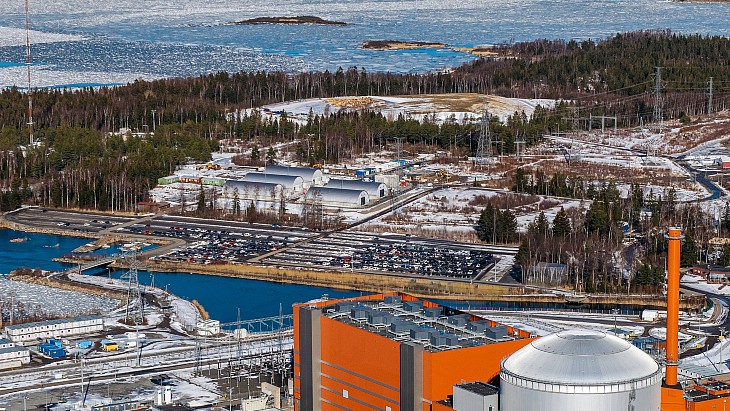
Very low-level waste has so far been disposed of in Olkiluoto's VLJ repository, which was commissioned in 1992 and consists of two rock silos, a hall connecting the two and auxiliary facilities constructed at a depth of 60-100 metres inside the bedrock.
Teollisuuden Voima Oyj (TVO) says the establishment of a new facility reduces the need to expand the operating waste repository.
Construction and operation of the facility "will not start until TVO makes the construction decision and STUK (Radiation and Nuclear Safety Authority of Finland) verifies compliance with requirements through specific inspections". Operation of the facility will not start until 2028 at the earliest.
The plan is for the facility, which will be near the VLJ repository, to have a total volume of 45,200 cubic metres, with nuclear waste accounting for up to 10,000 cubic metres. TVO said: "In a soil disposal facility, very low-level waste is packaged by waste type and covered with a layer of soil." It added that although it was the first such facility in Finland, it has been a long-standing method in other parts of the world, including in Sweden.
Senior Project Manager Jari Eskola said: "The operating permit is a significant step for responsible waste management in Olkiluoto. The solution is based on high safety requirements to ensure that the final disposal of very low-level waste is implemented in a controlled manner and protecting the environment."
Finland has five operable nuclear reactors providing about one-third of its electricity. There are various schemes and plans for new small modular reactors in the country. The country is close to giving the go-ahead for operations at the Onkalo deep geological repository to permanently dispose of used nuclear fuel. This is a repository in crystalline rock with used fuel in copper canisters surrounded by a bentonite buffer at a depth of 400-430 metres.


_29695_19459.jpg)
_98552.jpg)
_1_12560.jpg)
_22582.jpg)


_84289_33276.jpg)