_58707.jpg)
Switzerland currently has four nuclear reactors - two at the Beznau plant and one each at the Gösgen and Leibstadt plants - generating about one-third of its electricity. They all have an unlimited operating licence and can be operated as long as they are safe.
A new government report, which was ordered by a Senate postulate, analyses the potential consequences for Switzerland's future electricity mix of long-term operation of the Gösgen and Leibstadt nuclear power plants for up to 80 years, as well as the construction of a new nuclear power plant. The report examines the regulatory, financial, and energy policy conditions necessary to enable the safe long-term operation, beyond 60 years, of the two plants. The Swiss Federal Office of Energy had already confirmed in 2024 the technical and economic feasibility of operating Swiss nuclear power plants for up to 60 years. Therefore, the report primarily addresses the period beyond 60 years.
The report concludes that operating the Gösgen and Leibstadt nuclear power plants for 80 years would be technically feasible and, in most cases, cost-effective. Financial support would not be necessary at present, according to the Federal Council.
"In the future, long-term operation can help address potential electricity shortages during winter," the report says. "To achieve this, operators must make the necessary investments in renovations."
According to the report, the investments required for technical upgrades to ensure long-term operation should be amortised based on realistic assumptions regarding future electricity prices and costs. Non-economic risks stem from political and regulatory uncertainties, such as potential early decommissioning or stricter safety requirements. A stable regulatory framework is essential. Operators also emphasise that maintaining specific knowledge and skills is a challenge, particularly for the long-term operation of nuclear power plants.
Commissioned by the Swiss Federal Office of Energy, Frontier Economics and Siempelkamp NIS analysed the required technical measures, investment costs, profitability, and non-financial risks for the long-term operation of the Gösgen and Leibstadt plants for a period of up to 80 years. They concluded that the investments needed for the technical upgrades to ensure long-term operation would amount to between CHF0.7 billion and CHF1.2 billion (USD0.9-1.5 billion), according to the power plant.
"The decision regarding the lifespan of a nuclear power plant is linked to business management considerations," the report notes. "Operators will only aim for long-term operation if they anticipate being able to fully recoup the necessary investments profitably.
"Operation would likely be profitable for the operators, given realistic assumptions regarding electricity price trends and investment costs. From the current perspective, a substantial shortfall in profitability seems highly unlikely and would only arise if the framework conditions were persistently very unfavourable. The main risks to investment decisions lie less in technical challenges than in political and regulatory uncertainties. A stable, reliable, and predictable long-term framework is therefore essential to ensure planning security for operators."
Gösgen is a 1010 MWe pressurised water reactor that began commercial operation in November 1979. Kernkraftwerk Gösgen-Däniken AG operates the plant on behalf of its five owners: Alpiq AG (40%), Axpo Power AG (25%), the City of Zurich (15%), Centralschweizerische Kraftwerke AG (12.5%) and Energie Wasser Bern (7.5%). The plant generates about 13% of Switzerland's electricity needs.
_1bd346b0.jpg)
Leibstadt (Image: KKL)
Leibstadt features a single boiling water reactor built in the early 1980s. The plant produces 1165 MWe for six utilities with various stakes and provides electricity for two million households. Since 1984, Kernkraftwerk Leibstadt AG has invested a total of around EUR1.5 billion (USD1.6 billion) in the modernisation and maintenance of the plant. A further EUR1 billion is planned for renovations in the coming years to ensure safe, reliable and economical electricity generation until at least 2045.
A new Swiss energy policy was sought in response to the March 2011 accident at the Fukushima Daiichi plant in Japan. Two months later, both the Swiss parliament and government decided to exit nuclear power production. The Energy Strategy 2050 initiative drawn up by the Federal Council came into force on 1 January 2018 and calls for a gradual withdrawal from nuclear energy. It also foresees expanded use of renewables and hydro power but anticipates increased reliance on fossil fuels and electricity imports as an interim measure.
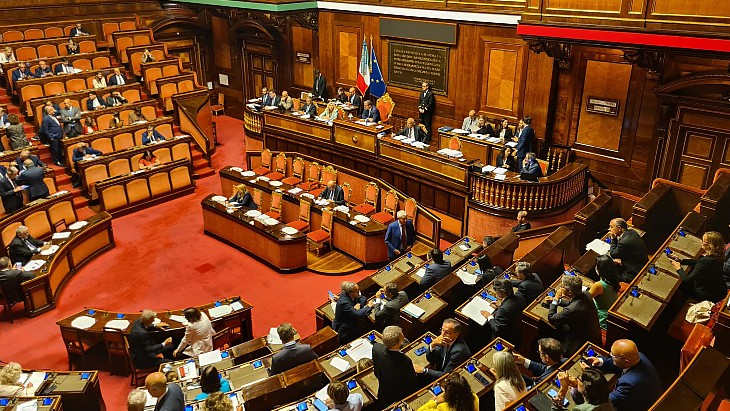
In August last year, Switzerland's Federal Council presented draft legislation that would remove the country's ban on the construction of new nuclear power.
In April 2024, Swiss utility Axpo said it was assessing the technical feasibility of operating the two-unit Beznau nuclear power plant beyond the 60 years currently planned. The two 365 MWe Westinghouse pressurised water reactors at the Beznau plant are the oldest power reactors in Switzerland. Unit 1 began operating in 1969, while unit 2 entered operation in 1972. In addition to providing power, both units also produce district heating.


_51287.jpg)
_42437.jpg)