The report, Enabling Nuclear-Powered Feeder Ships - A Joint Development Project on Port Call Feasibility and Regulatory Pathways, examines the safety and regulatory considerations associated with a nuclear-powered ship calling at a European Union port.
It finds that "the principal barriers to nuclear ship port calls are not technical, but relate instead to local and international regulatory alignment, governance, risk management integration and public acceptance".
Mikal Bøe, CEO of maritime nuclear energy specialists Core Power, said: "An obvious key to the success of civil maritime nuclear propulsion is the trusted confidence of port cities and their populations in ship calls by nuclear-powered merchant ships.
"Greenhouse gas emissions from the existing shipping fleet have become unsustainable and have led to the slowest sailing times we've seen in decades. Now is the time to start the important work of evaluating nuclear shipping in a modern context and this report does exactly that."
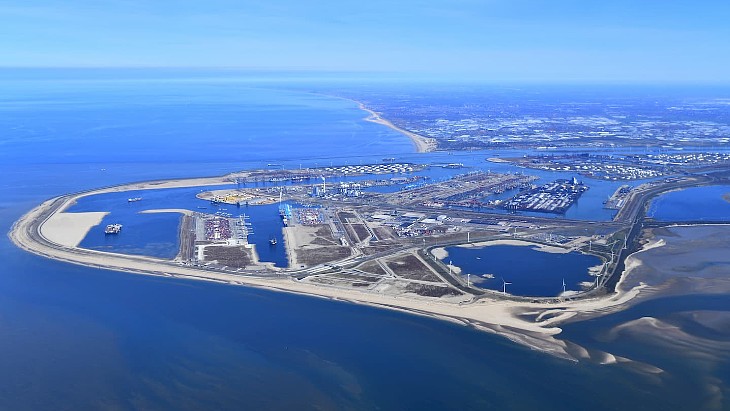
The report used the hypothetical situation of a nuclear-powered Maersk container ship calling at the Port of Rotterdam, to examine the issues.
Harbour Master of the Port of Rotterdam René de Vries said: "Ports need to understand how emerging energy and shipping technologies may interact with future port operations and industrial systems."
Meg Albrecht, Senior Engineer - Nuclear Technology and Alternative Fuels, Lloyd's Register, said: "The maritime energy transition will require the industry to examine a range of future fuel and propulsion pathways. This work contributes to a broader understanding of the regulatory and operational considerations associated with nuclear-powered vessels and helps establish a structured basis for further discussion and analysis."
Ole Graa Jakobsen, Head of Fleet Technology, AP Moller-Maersk said: "Civil commercial nuclear propulsion presents a number of significant challenges, including safety, waste management, regulatory alignment and public acceptance across regions. This study does not represent a decision to pursue nuclear propulsion, but contributes to further understanding of what would be required for ports and authorities to assess such vessels in a structured and responsible way. We continue to monitor and assess this technology alongside other low-emission solutions."
In its conclusion the report says that although "nuclear ships for commercial or civilian uses are in early stages of development, ports should proactively prepare for their arrival. Globally, efforts focus on technology, safety, and regulations. Locally, this involves legal, safety and operational measures, as well as cooperation with nuclear authorities. A key aspect of this preparation is gaining insights into the potential risks associated with nuclear power and understanding the technology so that risk perception is managed by engineering logic rather than public or promoter misconceptions."
The report adds: "Further research and communication are needed on radiation safety, reactor incidents, security threats, and their effects on ships, terminals, and personnel. Only with a thorough understanding of these risks can appropriate measures be taken, allowing the port to anticipate future developments responsibly.
"Each port expecting future nuclear ships must assess safety, security, safeguards and emergency procedures. Since ports vary, these local assessments help shape national, regional and international guidance or regulations."
The shipping industry consumes about 350 million tonnes of fossil fuel annually and accounts for about 3% of total worldwide carbon emissions. In July 2024, the shipping industry, via the International Maritime Organization (IMO), approved new targets for greenhouse gas emission reductions, aiming to reach net-zero emissions by or around 2050.
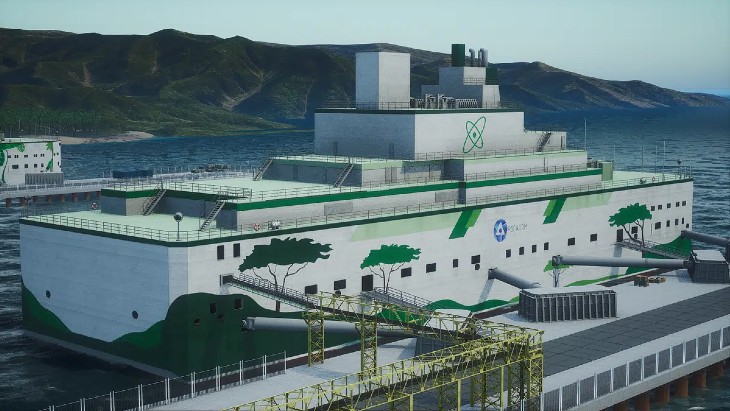
There are a range of different development projects for using nuclear power in civilian vessels. The IMO is also revising the Safety Code for Nuclear Ships and the International Atomic Energy Agency is planning on launching its Applications at Sea (ATLAS) initiative in August, which "aims to support the maritime industry’s exploration of small modular reactors to power civilian ships and to provide offshore energy, as operators consider alternative fuels and seek to strengthen long-term energy security".


_55605.jpg)