_64496_89439.jpg)
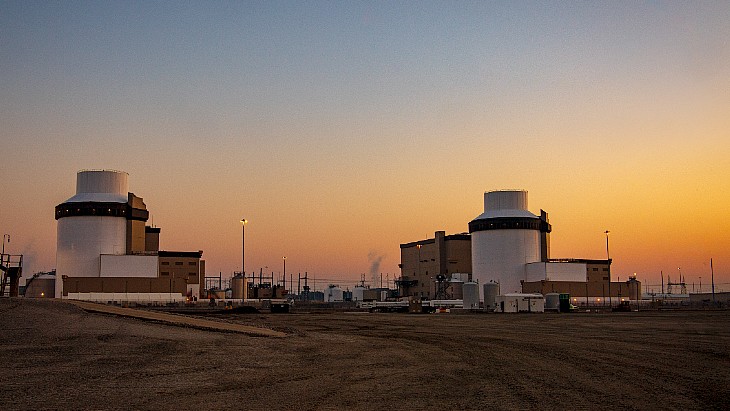
On 30 April, China's National Nuclear Safety Administration (NNSA) issued a 40-year operating licence for Taipingling 2. The first nuclear fuel loading operation - which involved inserting a total of 177 fuel assemblies into the core of the reactor - was completed on 3 May.
At 09:45 (local time) on 24 June, the first criticality control point of Taipingling unit 2 was officially signed and released, marking the start of the reactor's criticality operation phase.
The 1,116 MWe (net) pressurised water reactor reached criticality for the first time at 00:22 on 25 June.
_eb0f34a4.jpg)
Workers mark the achievement of first criticality (Image: CGN)
China General Nuclear (CGN) said the attainment of first criticality "lays a solid foundation for subsequent grid connection and commissioning" of Taipingling 2.
The Taipingling plant will eventually have six Hualong One reactors, with a total investment exceeding CNY120 billion (USD17 billion). The construction of the first and second units began in 2019 and 2020, respectively. Hot testing of unit 1 was completed in September 2024, with that of unit 2 completed in July 2025. Unit 1 attained first criticality on 3 February this year and was connected to the grid on 13 February. It entered commercial operation on 19 April.
Construction of the second phase of the Taipingling plant - units 3 and 4 - was approved by China's State Council in December 2023, with construction of unit 3 getting under way in June last year. The first nuclear safety-related concrete for the reactor building of unit 4 was poured last month.
Once all six units are completed and put into operation, the annual power generation will exceed 55 billion kilowatt-hours, CGN said. It will also reduce standard coal consumption by about 16.65 million tonnes and carbon dioxide emissions by about 50.82 million tonnes annually.


_22748.jpg)
_29250.jpg)