_93465.jpg)
Currently, Switzerland's four existing nuclear power reactors - two at the Beznau plant and one each at the Gösgen and Leibstadt plants - supply about 36% of the country's electricity and nearly half of its winter electricity. Starting in the late 2030s, they will be decommissioned one by one as they reach the end of their technical service life. The final plant (Leibstadt) is expected to go offline in 2044. Meanwhile, electricity demand is projected to rise by up to one-third by 2050 due to electrification. The resulting winter electricity gap serves as the starting point for this study.
The study - titled Economic Impact of Replacing Swiss Nuclear Power Plants - examines whether the construction of new nuclear power plants, in addition to the expansion of renewable energies, would be economically viable. Using a model-based impact analysis, it quantifies the direct effects that the construction and operation of a new nuclear power plant would have on Swiss gross domestic product (GDP), employment, and tax revenues for the federal, cantonal, and municipal governments. Broader benefits arising from the infrastructure role of a nuclear power plant are assessed in the context of existing studies.
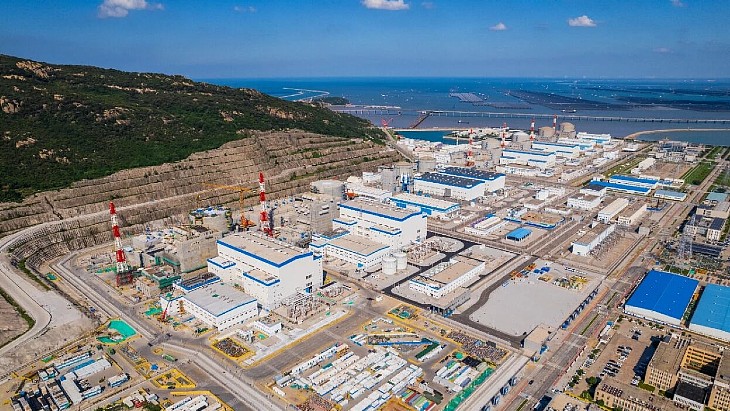
Under the current policy framework of the Electricity Act, the baseline scenario assumes the continued expansion of renewables as well as the construction of an EPR-type nuclear power plant with an installed capacity of 1.63 GW, scheduled to come online in 2050. The plant would generate 12.1 TWh of electricity annually - with around 6.7 TWh produced in winter - thereby covering about 15% of projected winter consumption. This would reduce structural import dependency and help stabilise seasonal price peaks. Despite conservative cost assumptions, risks regarding delays and cost overruns remain, as evidenced by previous EPR projects in Europe, the study says.
The model-based impact analyses reveal significant economic effects across several levels. The investments would generate a cumulative domestic value added of CHF7.4 billion (USD8.0 billion); around 51% of the construction costs would be retained within Switzerland as value added. Once operational in 2050, the plant would generate CHF1.2 billion in annual value added (both direct and indirect) along the value chain, plus an additional CHF240 million per year through dynamic effects - specifically, the impact of lower electricity costs on households, businesses, and export competitiveness. All figures are stated in 2024 prices.
The EPR life-cycle analysis indicates that, over a 60-year operational period, the project generates an annual value-added impact of CHF1.6 billion and supports 2,905 jobs. Direct taxes paid by individuals and legal entities to the federal, cantonal, and municipal governments amount to about CHF95 million per year. Thus, for every franc of subsidy invested - adjusted for the state subsidy component - there is a net GDP impact of CHF1.50 and tax revenue of CHF0.15.
When infrastructure, climate, and environmental effects are also taken into account, the total economic benefit increases to as much as CHF5.20 per franc of funding. The subsidy requirement per kWh is in a similar range to that found in other recent studies and is roughly the same as for renewable energies.
"If the current ban on new nuclear power plants were lifted, Switzerland could, if necessary, replace its existing nuclear power plants with modern facilities and thus close part of the expected winter electricity gap," Economiesuisse said.
A new Swiss energy policy was sought in response to the March 2011 accident at the Fukushima Daiichi plant in Japan. Two months later, both the Swiss parliament and government decided to exit nuclear power production. The Energy Strategy 2050 initiative drawn up by the Federal Council came into force on 1 January 2018 and calls for a gradual withdrawal from nuclear energy. It also foresees expanded use of renewables and hydro power but anticipates increased reliance on fossil fuels and electricity imports as an interim measure.
In August last year, Switzerland's Federal Council presented draft legislation that would remove the country's ban on the construction of new nuclear power.
A study by ETH Zurich and the Paul Scherrer Institute, published in late June, concluded the construction of new nuclear power reactors in Switzerland is not competitive under current conditions, but would become profitable with state subsidies, risk mitigation and significantly lower construction costs.


_51287.jpg)