_66891_61461.jpg)
Hot functional tests involve increasing the temperature of the reactor coolant system and carrying out comprehensive tests to ensure that coolant circuits and safety systems are operating as they should. Carried out before the loading of nuclear fuel, such testing simulates the thermal working conditions of the power plant and verifies that nuclear island and conventional equipment and systems meet design requirements.
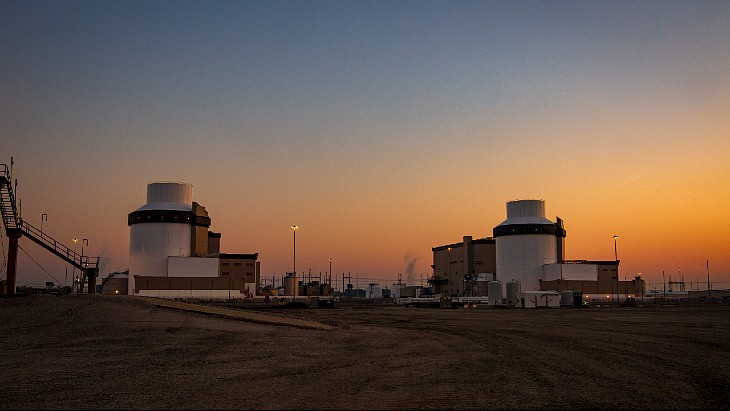
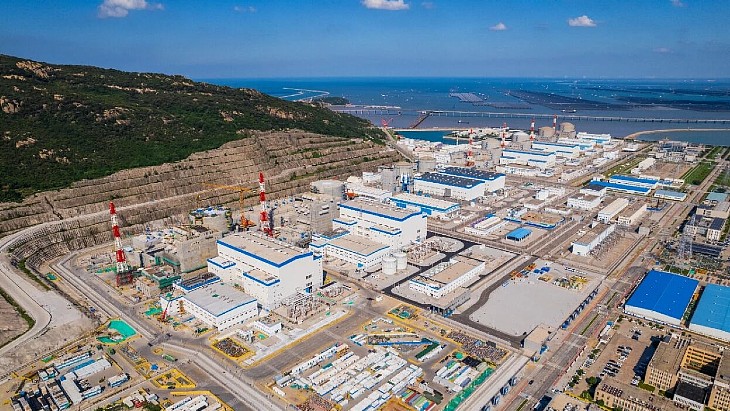
A report from the official China News Service says these tests are now under way at the ACP100 - also referred to as the Linglong One - with the aim of loading fuel into the reactor within the year.
Background
China National Nuclear Corporation (CNNC) announced in July 2019 the launch of a project to construct an ACP100 SMR at Changjiang. The site is already home to two operating CNP600 pressurised water reactors (PWRs), while the construction of two Hualong One units began in March and December 2021. The first of these Hualong One units entered commercial operation last month, with the second scheduled to follow early next year.
First concrete for the ACP100 was poured on 13 July 2021, with a planned total construction period of 58 months. Equipment installation work commenced in December 2022 and the main internal structure of the reactor building was completed in March 2023. The outer containment dome was hoisted into place in February last year.
Cold functional tests - carried out to confirm whether components and systems important to safety are properly installed and ready to operate in cold conditions - were completed in October last year. The main purpose of those tests was to verify the leak-tightness of the primary circuit and components - such as pressure vessels, pipelines and valves of both the nuclear and conventional islands - and to clean the main circulation pipes. The tests mark the first time the reactor systems were operated together with the auxiliary systems.
Under development since 2010, the 125 MWe ACP100 integrated PWR's preliminary design was completed in 2014. In 2016, the design became the first SMR to pass a safety review by the International Atomic Energy Agency.
Once completed, the Changjiang ACP100 reactor will be capable of producing 1 billion kilowatt-hours of electricity annually, enough to meet the needs of 526,000 households. The reactor is designed for electricity production, heating, steam production or seawater desalination.


_33441.jpg)
_51287.jpg)