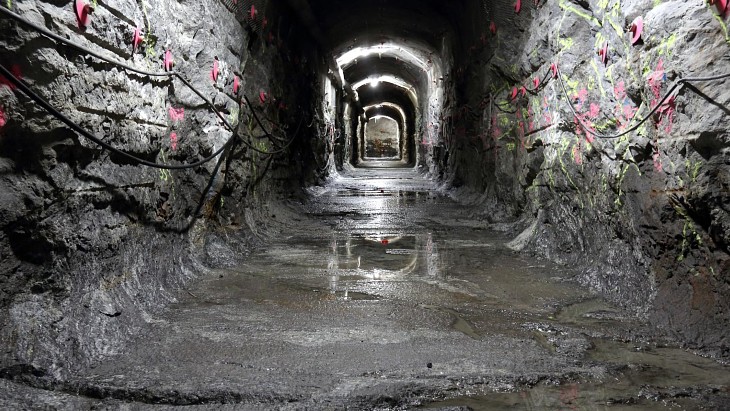
Some of the countries that have been planning such a facility - Canada, Finland, France, Sweden, Switzerland and the USA - took part in an event at the International Atomic Energy Agency’s General Conference in September where they outlined how things were going in their country.
Setting the scene: Why deep geological repository projects matter
A deep geological repository comprises a network of highly-engineered underground vaults and tunnels built to permanently dispose of higher activity radioactive waste so that no harmful levels of radiation ever reach the surface environment. They need to be located deep enough, and in suitable geological conditions, to ensure they will be safely secured for thousands of centuries.
The disposal of used nuclear fuel and other high-level waste has long been a pressing issue in terms of the perceived sustainability of nuclear energy programmes. For many decades this material has been stored safely in pools or special containers and facilities at surface, or near-surface, locations, often close by nuclear power plants. These are seen as interim storage measures pending a permanent solution.
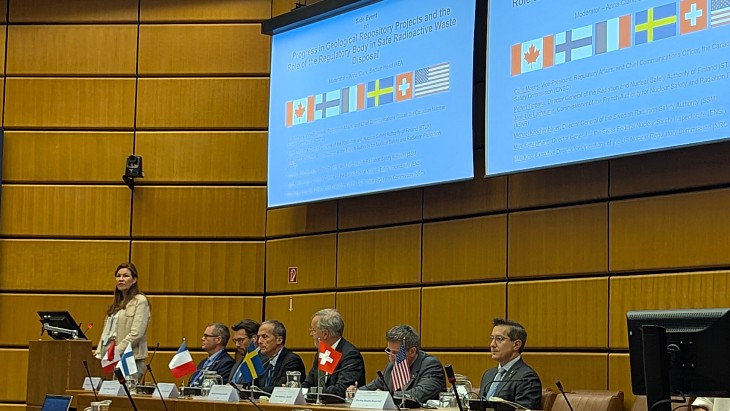
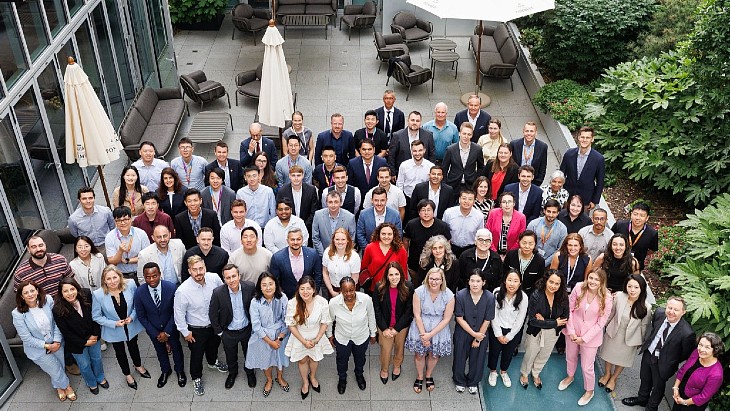
The sharing of information between countries is seen as key to development of projects (Image: WNN)
Hildegarde Vandenhove, Director of the IAEA Division of Radiation Safety, Transport and Waste Safety said: "There is often a perception that no long-term solutions exist for protecting people and the environment from this type of waste. But that perception does not reflect reality. We have known for a long time that deep geological disposal is technically feasible and demonstrably safe. It remains the internationally recognised solution. And yet, developing these facilities is a long and a complex process. It requires rigorous studies and extensive safety demonstrations. These are all first-of-a-kind facilities, and their construction takes time."
The process of selecting a site, and getting approval for it, takes decades, with Anna Clark, head of the Waste and Environmental Safety Section in the Division of Radiation Transport and Waste Safety at the IAEA, saying that "before operations can begin, there's a lengthy pre-operational phase with conceptual design, the planning, the surveys, the site investigations, site selection, narrowing down the number of sites, doing detailed characterisation of your preferred site, it's a long process before you even begin with the licensing of construction. And throughout that period, the safety case evolves and the role of the regulator also evolves, and the regulators have to adapt their expertise and knowledge as they go".
Canada
Colin Moses, Vice-President, Regulatory Affairs, and Chief Communications Officer at the Canadian Nuclear Safety Commission, outlined the status of the country’s deep geological repository which, he noted, started being discussed in the 1970s. It is being taken forward by the Nuclear Waste Management Organization, a not-for-profit organisation funded by Canada’s nuclear waste producers with a mandate to determine and find and build and operate a long-term solution for disposal of used fuel in Canada.
Its concept is for a "geosphere which forms a natural barrier of rock to protect the waste from disruptive natural events, water flow and human intrusion".
The current status is that Wabigoon Lake Ojibway Nation and the Township of Ignace were selected in November 2024 as the host communities for the proposed repository, following a consent-based siting process that had begun some 14 years earlier. Pre-licensing activities, including stakeholder engagement, pre-environmental assessment and technical reviews, have been taking place.
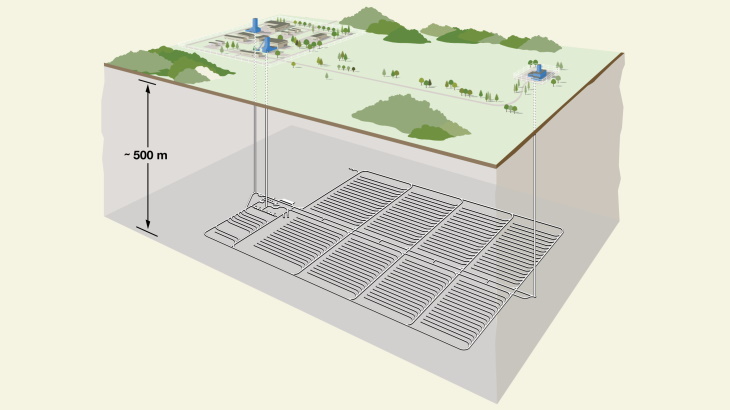
A concept for the Canadian used nuclear fuel repository (Image: NWMO)
Construction of the facility will only begin once the deep geological repository has successfully completed the federal government’s multi-year regulatory process and the Indigenous-led Regulatory Assessment and Approval Process, a sovereign regulatory process that will be developed and implemented by Wabigoon Lake Ojibway Nation.
The Nuclear Waste Management Organization explored more than 20 different potential locations in Canada looking for local communities to raise their hand and express an interest in potentially hosting the repository, with the last decade spent refining that list down to the one preferred site.
Moses said he was expecting the formal regulatory process to begin this year and "will play out over several years, looking to give an initial decision in 2030. That will allow them to advance construction in 2032, move into operation in 2042 and ultimately to operate that facility for many decades, expecting a current closure date of 2092".
"So this is a project that's playing out over multiple decades and has spent multiple decades getting ready."
Finland
Progress is furthest advanced with Finland’s Onkalo project. Petteri Tiippana, Director General of the Radiation and Nuclear Safety Authority of Finland (STUK) outlined the concept, which is a repository in crystalline rock with used fuel in copper canisters surrounded by a bentonite buffer at a depth of 400-430 metres.
For Finland, which is currently in the process of commissioning the deep geological repository, the process began in the 1980s with the then government setting a target for operation in the 2020s. Pre-licensing activities started almost immediately, Tiippana said, in terms of research and design and for the concept, with actual licensing steps beginning in the early 2000s with a site selection. A construction licence was issued in 2015.
Currently the encapsulation plant has been commissioned and tested the dummy fuel elements in five canisters and transported them to the underground facility. The next phase will be to "test the underground facility and the final disposal of those five copper cases". He said that the reviewing of safety documentation is approaching its final stages and the aim is for a decision next year, with operations then starting.
See how Finland's project will work:
France
France plans to construct the Centre Industriel de Stockage Géologique (Cigéo) repository - an underground system of disposal tunnels - in a natural layer of clay near Bure, to the east of Paris in the Meuse/Haute Marne area. The plan is to dispose of 10,000 cubic metres of high level waste and 75,000 cubic metres of intermediate-level waste.
Jean-Luc Lachaume, Commissioner of the French Authority for Nuclear Safety and Radiation Protection (ASNR), said that, as with other countries, there had been decades of work already on developing the repository, with parliamentary debates about it beginning in the 1980s, before a decision 20 years ago to go ahead with a deep geological repository.
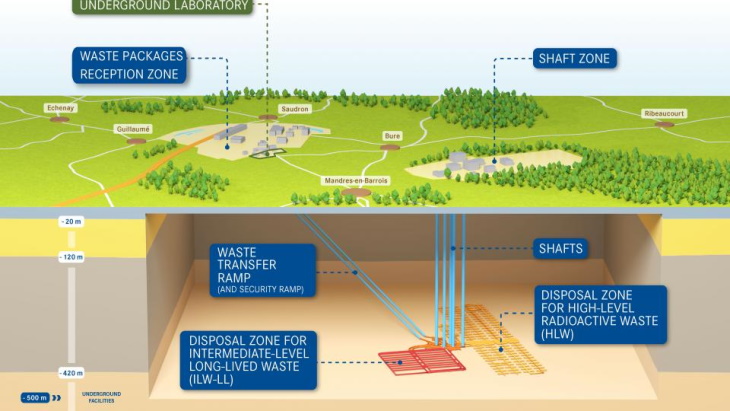
A diagram of the planned Cigéo repository (Image: Andra)
The milestone of the construction licence application being submitted happened in 2023, since when it has been under review. A technical review was completed in June and ASNR issued a favourable opinion on the application earlier this month.
This will be followed by the consultation phase and public inquiry in 2026 and a potential licence granting in 2027 or 2028, with a target first operation of the pilot phase in 2035.
Sweden
A site has been selected at Fosmark, 150 kilometres north of Stockholm. Surface works have been taking place and the application to start underground excavation was submitted in January 2025 and is currently being considered. The concept for Sweden is the repository to be at a depth of 500 metres, in crystalline rock, with copper canisters each surrounded by bentonite clay to keep groundwater away from the canister and to provide a barrier to any potential leakage of radioactive material.
As with all countries, there has been decades of preparation and discussion, with regulatory licensing reviews and court hearings from 2011 to 2018 prior to government approval being issued in 2022.
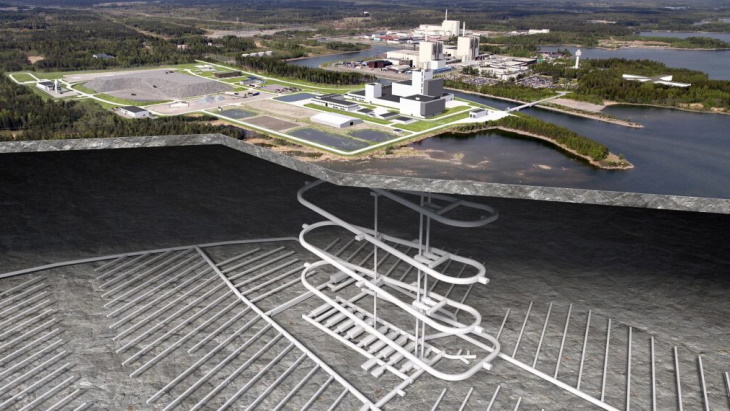
A visualisation of the completed repository (Image: SKB)
Michael Knochenhaut, Director General of the Swedish Radiation Safety Authority (SSM), said "it started in the 1970s and 1980s - it has definitely been a journey - there have been quite a lot of technical challenges to demonstrate the protected capacity, both to meet our requirements as a regulator, but also to remain intact for more than 100,000 years".
He noted the importance of gaining public trust and acceptance, which takes time, and said there was also the need to build up knowledge within the regulator and an "important factor during this long journey has been a clear allocation of responsibility, with the ‘polluter pays’ principal".
Above-ground construction work is to continue while the repository construction permit is considered, with the authority’s approval coming in 2026 or 2027, which would allow the start of underground construction, followed by trial operation.
Switzerland
Switzerland is in the final stage of the site selection process, which began in 2008, with national and international participation. The plan is for a combined repository for high- low- and Intermediate-level waste, with a general licence application submitted and due to be considered by 2027 with a government decision targeted for 2029.
Marc Kenzelmann, Director General of the Swiss Federal Nuclear Safety Inspectorate, outlined the background to the site selection, noting that Switzerland was a country about 7% the size of Texas, with two thirds of its area covered in mountains, so unusable for a high-level waste repository because the Alps could rise by a kilometre over the next million years, which is "the time frame that we have set for a safe, deep geological repository. So the Alps have an active geology, but what we need is a boring geology".
This has meant that the location search was focused on the area near to the German border, so "we have involved Germany from the very start of the selection process". He said that one issue was making sure to take the time and effort to build up stakeholder trust. In their case there have also been some unique differences of public opinion, with "Swiss people generally less concerned than German people" about the issue.
In November 2024 Switzerland's national radioactive waste disposal cooperative Nagra applied to the Swiss Federal Office of Energy for a general permit for the construction of the planned deep geological repository for radioactive waste at Nördlich Lägern in northern Switzerland, and a used nuclear fuel encapsulation plant at the existing Zwilag interim storage facility in Würenlingen in the canton of Aargau.
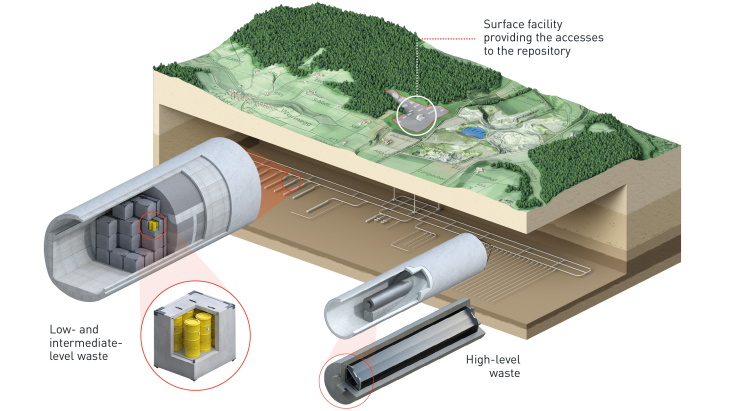
The concept of the Swiss repository(Image: Nagra)
According to current planning, the Federal Council will decide on the application in 2029 and Parliament in 2030. A national referendum is expected to take place in 2031.
Once the general authorisation for the repository comes into force, geological studies will be carried out underground in the area of implantation (through the creation of an underground laboratory), with the aim of acquiring more in-depth knowledge with a view to the construction of the repository. The application for a building permit, then later the application for an operating permit, can then be submitted. According to current planning, the repository could come into operation and the first radioactive waste could be stored there from 2050.
The USA
Yucca Mountain has since 1987 been named in the US Nuclear Waste Policy Act as the sole initial repository for disposal of the country's used nuclear fuel and high-level radioactive wastes. The DOE submitted a construction licence application to the Nuclear Regulatory Commission in 2008, but the Obama Administration subsequently decided to abort the project and there have been various twists and turns since then, with the upshot that it has not been built.
Mike King, Executive Director for Operations at the US Nuclear Regulatory Commission, said the current status of its high-level waste disposal programme is that NRC staff had reviewed the US Department of Energy’s application for a repository at Yucca Mountain and staff completed its Safety Evaluation Report more than a decade ago and concluded it met safety standards "however there were two remaining environmental and programmatic pull points that prevented the final authorisation" and since 2016 funding has been halted and there are no activities taking place on it other than record-keeping, and the licensing process is currently suspended.
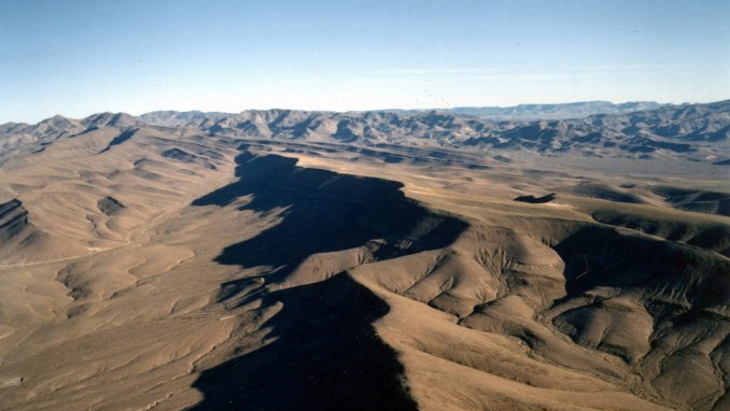
An aerial view of Yucca Mountain, Nevada (Image: DOE)
King stressed that the NRC continues to participate in a variety of national and international activities related to geologic disposal with lessons to be shared and learned. He said that in the interim there are about 100 different locations where used fuel is being stored in fuel pools or dry cast storage "however we are also keenly interested in what is the ultimate permanent storage" solution.
He said that from a regulator's perspective it was important to be objective and take a very methodical approach and engage with the public. In the Yucca Mountain case there had been 100+ technical exchanges with the the applicant which are open to the public "so they could see that we are addressing the key technical issues".
His other lesson was the technological implications of such a long-term process, and "thinking about that ahead of time and keeping your records in a way that you can retrieve them - we probably started with some microfiche, this was an era before everybody had PCs. And so the software that we used changed so much over time". This had added to the challenge of collecting all the records and putting them in a recoupable format.
And finally
The general thrust of the discussion was that there needs to be a clear delineation of responsibilities for the project, with long-term planning and clear public consultation and decision-making processes to ensure there is community trust in the decision making process. As one speaker put it: "We need to understand what they want to understand and understand what they understand." Another speaker pointed out that the reason some projects have not proceeded in the past has not been because of any technical failings, but because of public opposition/political reasons. The regulators were also urged to be sufficiently flexible to allow for changes in concept development. On site selection those taking part agreed that it should not be fixed on getting the best site, as there may be a few sites which meet all the necessary criteria.
They also agreed on the importance of sharing lessons from the projects so that other countries which may be planning to embark on their own deep geological repository - and the IAEA itself as advisors - can benefit from that experience.


_55605.jpg)