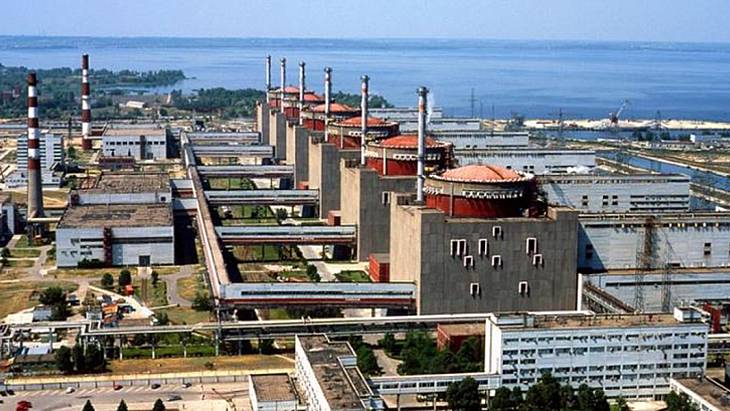
The plant, which has been under Russian military control since early March 2022, lost connection to its last operating external power line on 20 August.
Since then it has been relying on its fleet of emergency diesel generators to provide the power the plant needs, including for the pumps which cool the six reactors and their used fuel ponds.
The International Atomic Energy Agency (IAEA) team at the plant have been told that a planned delivery of diesel to the site in May had been postponed because of military activity. On Thursday and Friday, the IAEA said its experts observed the transfer of "several dozens of tonnes of diesel fuel from two different off-site locations near the ZNPP to the plant".
IAEA Director General Rafael Mariano Grossi said: "The availability of diesel fuel is of paramount importance whenever a nuclear power plant loses off-site power, as is the ability to maintain uninterrupted logistical supply chains to and from the site. The current situation once again shows why reliable external power and secure supply routes are indispensable for nuclear safety and security. Without the restoration of off-site power or additional diesel fuel deliveries in the near future, the plant could face a station blackout within approximately ten days."
According to the official Russian Tass news agency, the plant operators have said there is enough fuel for the diesel generators. “However, due to shelling of the access roads, it is currently impossible to replenish the reserves," a spokeswoman is quoted as saying. It also quoted the Director General of Russia's state nuclear corporation Rosatom, Alexei Likhachev, as saying the fuel delivery operation would be organised "under any circumstances”, potentially with an IAEA escort.
The IAEA is seeking to arrange what would be a seventh localised ceasefire to allow repairs to take place to the external power line, which it said lost connection with the plant on 20 August "following military activity on the northern side of the Dnipro River".
There have also continued to be incidents involving drones at, or near, the plant - with the IAEA saying it had been informed of a drone incident on 25 August near the cooling pond which injured two plant staff, and two more drone incidents the following day, one of which was in the area of the dry used nuclear fuel storage site.
The agency also reported drone activity and air raid alarms at the South Ukraine, Khmelnytsky and Chernobyl nuclear power plant sites.
Grossi said: "Attacks that threaten nuclear power plant staff or strike areas related to the spent fuel storage or cooling pond are unacceptable and must stop. Even when there is no impact on nuclear material, such incidents carry serious risks for nuclear safety and security. I again call for maximum military restraint to protect nuclear facilities and the people who work there."


_33441.jpg)
_17445.jpg)
_18654.jpg)