_53954.jpg)
The proposed small modular reactor (SMR) plant is envisioned to consist of six of Blykalla's SEALER reactors, with a total generating capacity of about 300 MW. This corresponds to the electricity demand of around 150,000 households, a large-scale industrial operation, or a medium-sized data centre, Blykalla noted. The project is expected to generate 300-400 direct jobs, as well as several thousand indirect employment opportunities in the region.
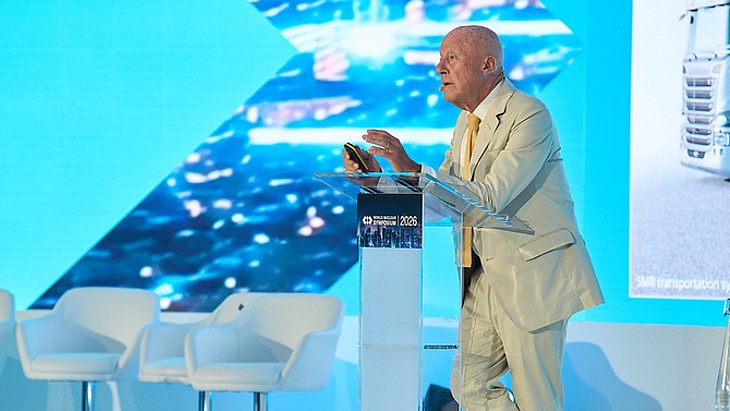
"The decision to move forward in Norrsundet is based both on the site's favourable conditions and the growing need for stable, fossil-free electricity to enable industrial development," said Jakob Stedman, CEO of Blykalla. "Gävle is a strategically important location where new power generation can support long-term growth and strengthen competitiveness."
"Gävleborg has very good opportunities to be a thriving region: two European roads, railway, deep port, available labour, access to biomass, strategic geographical location, and a modern university," Blykalla said in a notice of a January 2025 public meeting about the proposed plant. "These are just a few of many factors that allow the region to have a strong industry and tremendous growth opportunities. Today, however, there is a lack of access to plannable fossil-free energy to support such development, and the region needs to turn down important opportunities due to energy shortages.
"A possible solution could be to establish an SMR in the region. Blykalla's technology offers a safe and environmentally friendly way to conduct energy-intensive production, expand existing industries, and meet future energy needs. Gävleborg thus has the opportunity to become a global pioneer for clean energy production, and a Swedish industrial hub."
Blykalla said it aims to initiate the permitting process later this year. It will now continue site investigations and detailed studies, alongside maintaining an open and ongoing dialogue with local stakeholders as the project progresses.
The project is subject to approvals from several authorities, including the Swedish Radiation Safety Authority, the Land and Environment Court, the Swedish Government, and Gävle Municipality. Subject to the necessary permits and final investment decisions, the facility could become operational in the first half of the 2030s.
Blykalla - formerly called LeadCold - is a spin-off from the KTH Royal Institute of Technology in Stockholm, where lead-cooled reactor systems have been under development since 1996. The company - founded in 2013 as a joint stock company - is developing the SEALER (Swedish Advanced Lead Reactor). A demonstration SEALER (SEALER-D) is planned to have a thermal output of 80 MW. Blykalla's goal is for its first 140 MWt SEALER-55 commercial reactor to be ready for operation in the early 2030s.


_76412.jpg)
_38809.jpg)
_15774.jpg)
_29250_15814.jpg)